AI-native 软件开发:从意图到可信交付
Published:
一个开发者把“修复订单重复创建”交给编码 Agent。很快,代码改好了,测试也通过了。准备合并时,团队却发现几个问题仍然没有答案:两个同时到达的请求,会不会都认为订单还没创建?服务器已经保存订单、客户端却没收到响应时,再试一次会发生什么?如果修改出了问题,换回旧代码能否恢复数据?
这个场景说明了 AI 进入软件开发后的一个核心变化:实现变快以后,团队更需要说清楚要做什么、怎样检查,以及出了问题由谁负责。把这些工作连接好,生成的代码才能变成真正可用的软件。
本文讨论的 AI-native 软件开发,是把人、Agent 和工具的工作重新安排好:人确定目标和限制,Agent 读取项目资料、调用工具,并根据运行结果继续工作。工具留下可核对的记录,团队再用实际效果改善下一轮开发。图中的 Human 指开发者或负责人,Tool 指测试、构建等工具;具体分工应随项目风险和团队条件调整。
下文始终用一个例子:用户提交订单后没收到响应,于是重试,系统怎样避免重复下单。这涉及幂等性——在约定范围内,同一请求重复提交,也不会因此重复创建订单。案例、任务说明和流程图用于解释方法,不代表已经运行过的项目或测得的收益。
一、AI-native 改变了开发的组织方式
软件开发需要接连回答几个问题:用户需要什么,系统应该怎样响应,哪些原有功能不能受影响,出现错误时怎样恢复。写代码只是其中一个环节。即使代码写得更快,讨论需求、检查结果和协调上线仍然需要时间。需求不清、测试很慢、上线后又看不见运行情况的团队,可能很快积累更多等待审查的修改。
Anthropic 的 AI-native SDLC playbook 讨论了规划、设计、构建、测试、部署和维护,强调开发全过程都需要调整。[1] 团队可以沿着一个功能从想法到上线的过程,重新安排谁提供信息、谁执行、谁检查、谁负责。衡量效果时,要看可靠的功能多快到达用户,以及为此付出了多少人工和计算成本。
开发同样的功能、采用相同的完成标准时,可以先观察一种直观变化:Agent 缩短了编码、调试和局部修复的时间。图 1a 暂时把其他阶段的时间保持不变,展示实现变快以后,需求讨论、设计、测试审查和等待发布的时间,怎样占据更大比例。
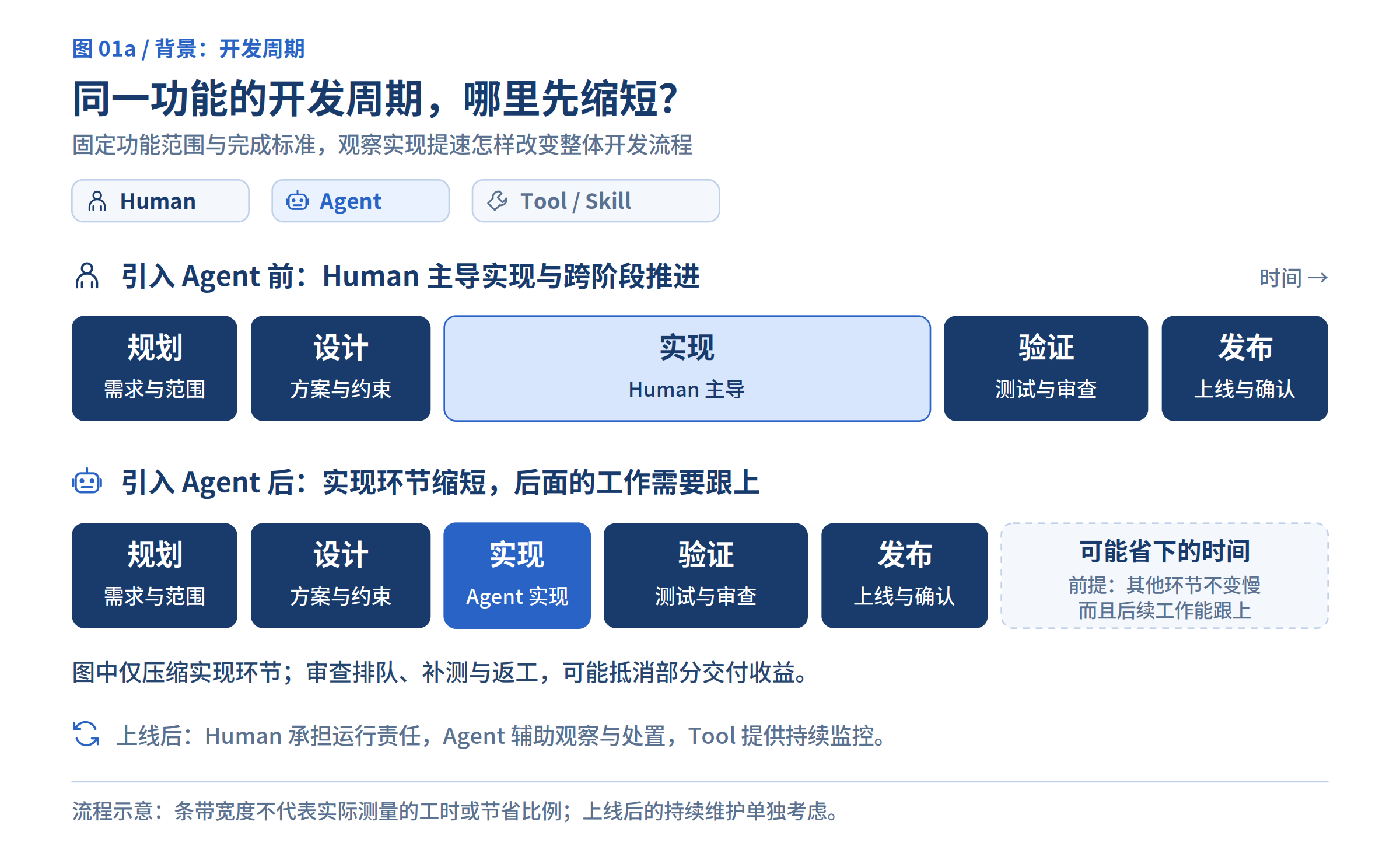
图 1a:同一功能的开发周期变化示意。图中只缩短实现时间,宽度不代表实测工时;如果后面的工作能够及时跟上,就可能节省虚线框所示的时间。上线后的持续维护单独考虑。
这部分时间能否真正省下来,取决于后面的工作能否跟上。等待审查、补做测试和返工都可能抵消收益,因此团队还需要一起改进检查、交接和发布方式。
Agent 可以沿着用户请求找到相关代码,提出方案、修改实现、补充测试,再根据失败结果继续修复。仓库、运行环境和测试工具,让这些工作真正发生并留下记录。人则需要持续判断目标是否合适、业务要求是否准确,以及哪些新情况需要改变方案。三者之间要有清楚的交接方式。
传统开发已经广泛使用脚本、自动化测试、自动检查流程(CI)和监控,开发者通常负责拆任务、选工具、解释结果并推动下一步。AI-native 开发把更多衔接工作交给 Agent:Human 确定目标和可做的范围,Agent 连续调查、执行和检查,Human 处理重要取舍与新问题。团队需要让工具方便调用、结果容易理解,Agent 才能持续推进工作。
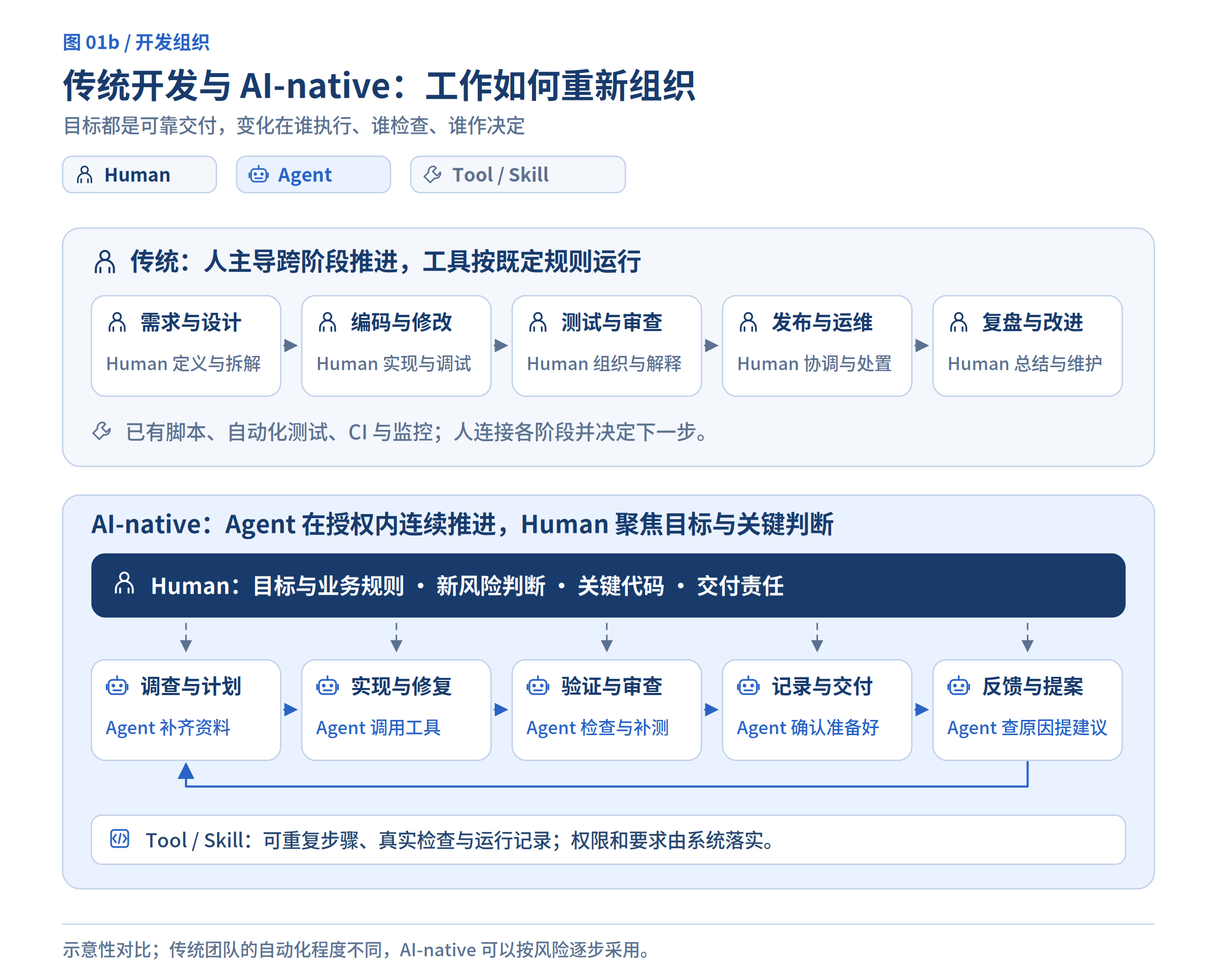
图 1b:传统开发中,人主导跨阶段推进,工具提供自动化;AI-native 开发中,Agent 在授权内连续执行,Human 持续掌握目标、关键约束与风险判断。两种方式都使用测试、CI 和监控。
在订单案例里,“减少重复订单”首先是一项业务意图。团队还需要确认重复的定义、重试的边界与允许改变的接口行为。Agent 随后才能寻找缺陷并实现方案。若这些信息只存在于某位同事的记忆中,模型就只能依据局部代码补全假设;一旦假设错误,更多生成与检查也可能沿着同一个方向偏离。
因此,团队需要把原先只存在于讨论和个人经验中的判断,逐步写进任务说明、接口约定、测试和排查工具。这样,Agent 和其他同事都能用上这些经验。人也需要继续了解系统,才能发现文档、规则或测试已经跟不上真实需求。
二、把人的意图变成可执行的任务
“修复重复订单”足以开启讨论,却不足以指导完整实现。重复可能来自用户连续点击、客户端超时重试,也可能来自消息重复投递。它们涉及不同的边界。一个可执行任务需要回答:本次解决什么,允许改到哪里,哪些条件始终成立,以及凭什么判断已经完成。本文把这组约定称为任务说明。
比如,客户端可以给每次下单附上一个请求标识,重试时继续使用它。这个标识叫幂等键。在面向多家企业或团队的系统中,还要区分请求属于哪一家;这样的客户组织也称“租户”,下文的客户都指这样的组织。业务和工程负责人需要确认几条规则:
- 在约定有效期内,同一客户、同一标识和相同请求内容,至多创建一个订单;已经完成时,重试能找回同一订单和约定的结果。
- 同一标识却带来不同内容时,明确报告冲突。
- 不同客户的请求和数据互不影响。
- 请求还在处理时,可以等待,也可以返回约定的“稍后重试”状态;标识过期后的处理方式另行约定。
还要考虑出错时怎么办。服务器可能已经保存订单,响应却在网络中丢失;客户端再试一次,必须能找到已经完成的结果。只要求“不再创建订单”,可能让系统拒绝所有重试,用户却始终不知道是否下单成功。设计时要同时解决重复下单和找回结果这两个问题。
这些内容可以按一个顺序想清楚:先确定目标,再查相关资料,然后明确哪些业务规则必须守住,最后说明怎样检查才算完成。Human 确认目标和关键规则,Agent 查事实、补方案、列出没弄清楚的问题。权限和停止条件始终有效:Agent 每次读取、修改和调用工具,都要在允许范围内;要求不清、反复失败或出现新风险时,就交给 Human 判断。查到新情况后,也可以回头更新任务说明。
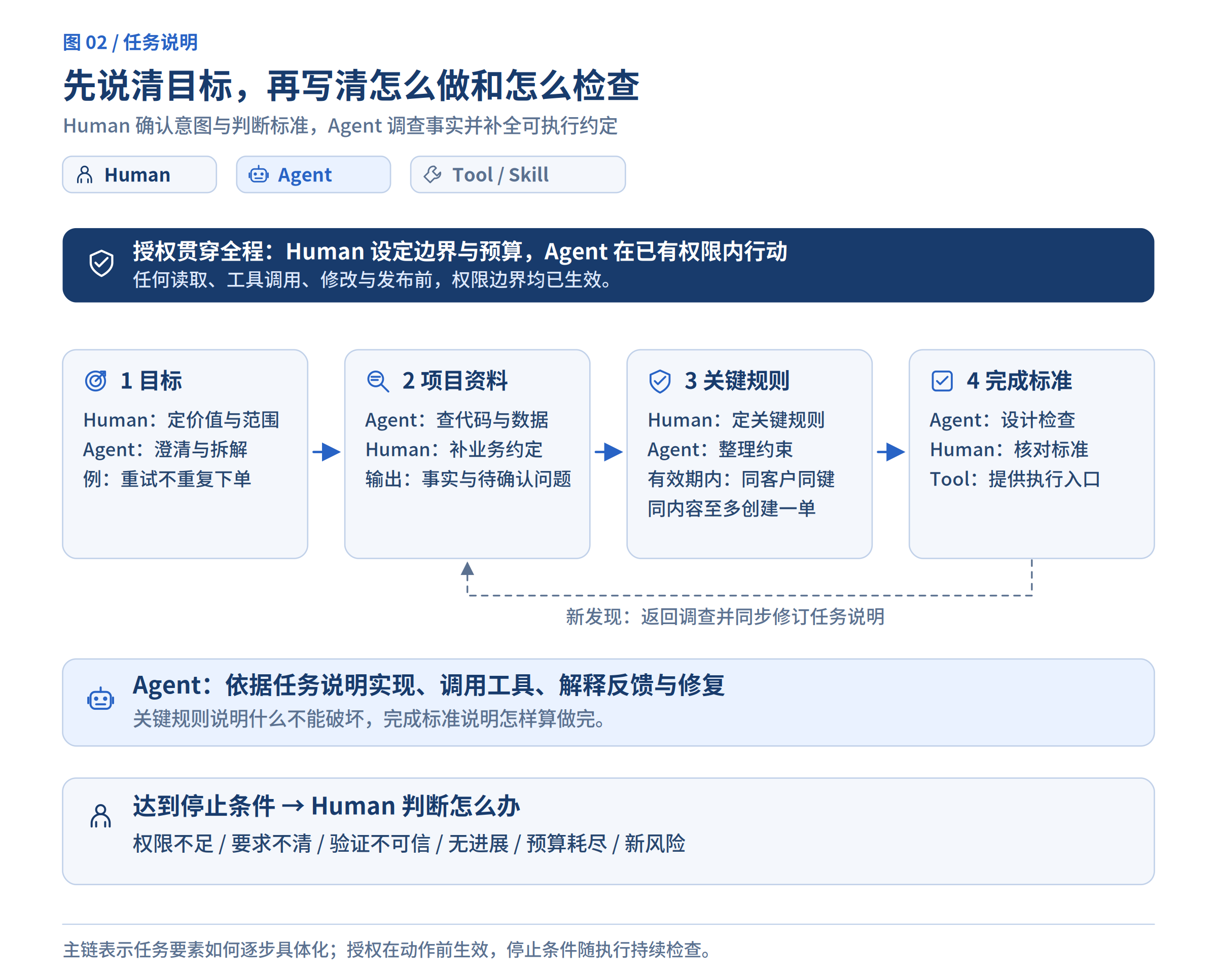
图 2:从“要做什么”,逐步走到“先了解什么”“哪些规则不能破坏”和“怎样算完成”。Human 确认关键要求,Agent 调查并执行;权限和停止条件贯穿全程,已有标准可以继续使用。
完成标准要能实际检查,这也就是验收条件。例如,让多个请求同时到达,检查数据库中最终有几个订单;模拟保存成功但响应丢失,核对重试是否返回同一订单。任务资料还应告诉 Agent 去哪里找接口说明、表结构、历史问题和运行命令。OpenAI 的工作流示例将目标、计划、各阶段资料和执行记录分开组织,具体文件安排可以按项目调整。[2]
任务说明也要随调查结果更新。如果旧客户端没有传递请求标识,或者现有数据无法找回结果,团队就要重新考虑怎样兼容旧功能、这次改到哪里。新发现、决定和完成标准的变化都应记下来,让实现方、审查方和负责人依据同一份说明工作。讨论可以在聊天中进行,定下来的约定要能在任务记录或仓库里找到。
任务说明也要写清 Agent 能做到哪里。它可以在约定范围内改代码、补测试;如果必须新增数据表、改变外部调用方式或调整检查要求,就提交具体方案,请有权限的人决定。已允许的常规动作可以继续。要求冲突、反复没有进展或超过预算时,应说明找谁处理。小任务用几段文字就够,复杂修改再补充细节。
三、为 Agent 准备能工作的工程环境
能力很强的模型,也会被不完整的工程环境困住:启动命令失效,测试依赖某台电脑上的特殊配置,错误信息只有一句“超时”,项目规则分散在不同地方。人可以凭经验绕过这些障碍,Agent 往往需要反复摸索。这会增加成本,也容易让它改错地方、找错原因。
首先要建立容易找到的项目资料。仓库应有简明入口,说明系统解决什么问题、模块如何划分、常用命令在哪里,以及哪些地方需要特别注意。细节放在对应模块附近,通过稳定链接找到。文档要能说明适用范围,并随代码变化更新。把所有历史记录塞进一个超长提示,会使真正影响本次任务的信息更难被识别。
其次,要让常用操作可以重复运行。构建、测试、启动服务和准备数据,都应有明确命令、依赖说明以及成功或失败的结果。订单案例需要一个带真实数据库、不会改动线上数据的独立测试环境。工具还要保留请求输入、具体检查结果、数据库状态和关键日志,让 Agent 知道哪里出了问题。
重复工作可以整理成 Skill,也就是供 Agent 重复使用的一套工作步骤。工具负责搜代码、跑测试、查数据库等动作;Skill 说明什么时候用、按什么顺序做、保存哪些结果、遇到什么情况停下。Agent 选择并执行它,Human 负责检查步骤和权限是否合适。Skill 可以调用脚本、引用文档,但不会自动获得更多权限,里面的步骤也需要维护。
起步时,可以围绕四种稳定工作建立小型 Skill,名称和内容按仓库调整:
| Skill | Agent 负责的工作 | 需要准备的工具 | 交接材料与停止点 |
|---|---|---|---|
| 项目调查 | 找到相关代码、业务规则和待确认问题 | 仓库搜索、Git、项目文档 | 来源位置和问题清单;权限不足或要求冲突时找人 |
| 修改后检查 | 重现原问题,检查修复和原有功能 | 测试工具、专用数据库、日志与截图 | 版本、命令和结果;无法解释失败时停止盲试 |
| 独立审查 | 对照任务说明检查指定版本,寻找遗漏 | 代码差异、代码搜索、独立测试环境 | 问题、理由和没检查到的部分;需要业务取舍时找人 |
| 发布准备 | 核对代码版本、检查结果和恢复方案 | CI、待发布程序、监控与检查脚本 | 是否准备好、还缺什么;关键条件不满足时暂停 |
每个 Skill 至少写清需要什么资料、具体怎么做、交回什么结果,以及什么时候找人。按固定规则就能完成的操作,适合交给普通脚本;Agent 负责选择步骤、解释结果和处理新情况。权限和必需检查仍由实际运行工具的系统控制。可以先把最常用的一条检查流程做好,再逐步改进。
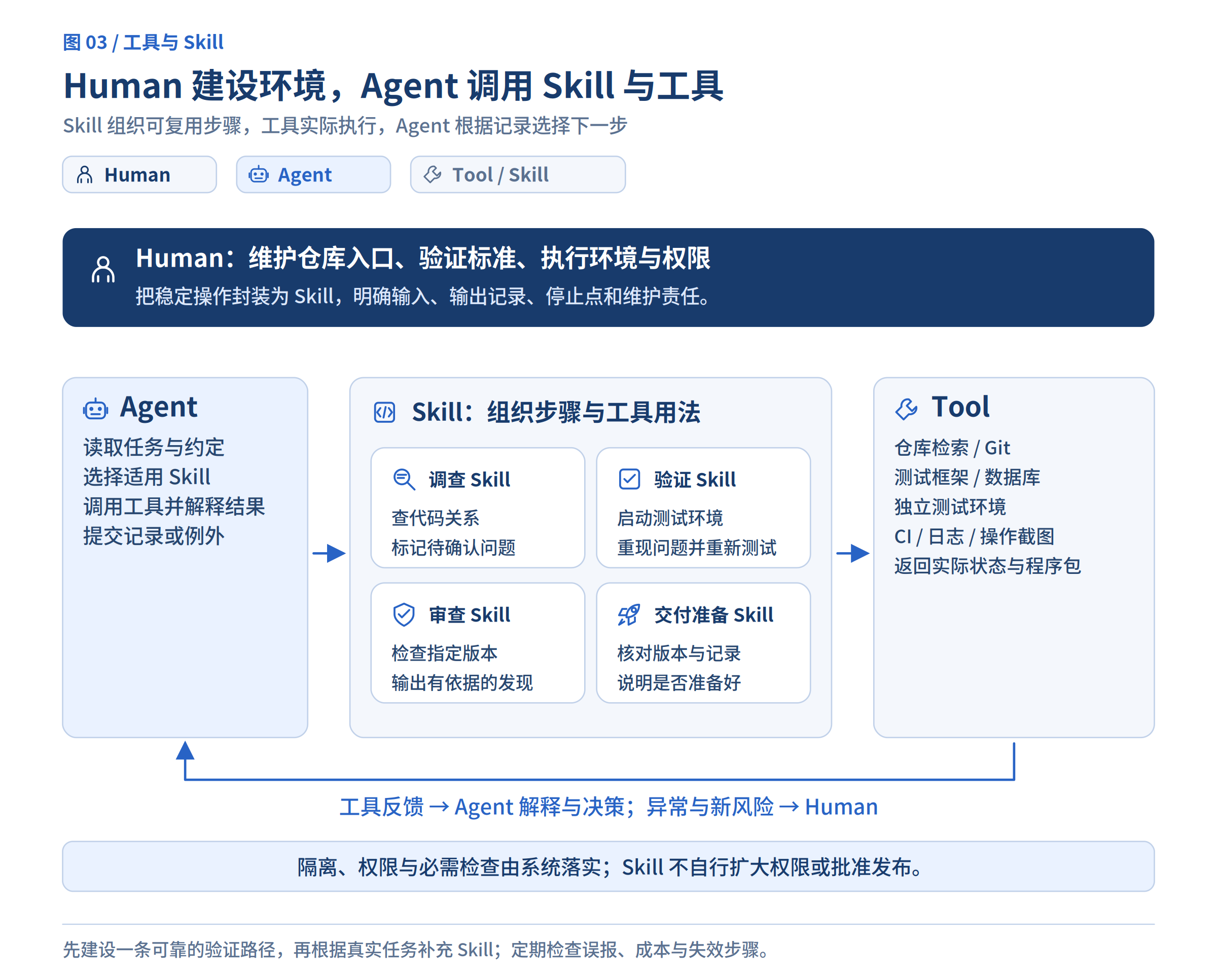
图 3:Human 维护环境、规则和授权,Agent 调用适用 Skill;Skill 组织步骤,工具执行真实动作并返回检查记录。权限约束覆盖全部调用。
还要让 Agent 看清程序怎样运行。修改页面,可以提供截图、操作过程和网络请求;修改后端,可以提供日志、数据库结果和能够再次触发错误的输入。“请求超时”可能来自代码、外部服务,也可能只是测试数据没清理。结果越能说明原因,Agent 越容易修对问题。每次修改后还要检查原有功能是否受影响,这类检查通常称为回归测试。
还要安排好独立工作空间和权限。单独的代码目录、临时数据库和随时能重新准备的环境,方便同时开展调查、保存版本和撤销修改。权限要符合当前任务,并通过工具和系统真正限制操作范围。可以先把最常用的启动、测试和排查步骤做好,再根据遇到的问题补工具;这样新增 Agent 时,才能让它们真正开展工作。
四、让执行在反馈中持续推进
Agent 要持续完成任务,需要反复做几件事:看目标、选动作、读结果、改判断,并在合适的时候停下。通常先查清现状、安排实现和检查步骤,再小范围改代码、运行、分析失败并修复。每一轮都应该增加一些信息:错误在哪里,原先哪个想法不成立,为什么接下来要这样做。
以两个请求同时到达,也就是并发为例,Agent 可以先设计一个小实验:让两个请求都查到“订单不存在”,再让它们同时继续。如果旧版本创建了两笔订单,团队就抓到了原问题。数据库的唯一约束可以阻止重复记录;事务则把相关数据库操作作为一个整体,要么一起成功,要么一起撤销。具体怎样使用,要看现有设计。只在代码中多查一次,仍可能让两个请求都先查到不存在、随后各写一笔订单。
每次失败都应该影响下一步。结果不符合业务要求,就查代码;测试要求与任务说明冲突,就先核对标准;数据库连不上,就检查环境;偶尔才出现的错误,就记录当时条件,尽量找出稳定触发它的方法。反复重跑同一个命令,直到碰巧通过,既解释不了问题,也可能让 Agent 学会绕过真正的错误。
分工可以看双方交给对方什么。Human 给出任务说明和可做的范围;Agent 查资料、改代码、调用工具,再解释检查结果。能自行修复的问题就在预算内继续处理,完成后交回代码版本和运行记录。需要额外权限或遇到无法解决的分歧时,Agent 说明已经做了什么、卡在哪里、需要什么决定。Human 补充信息或调整方案后,它再继续,常规动作无需反复请示。
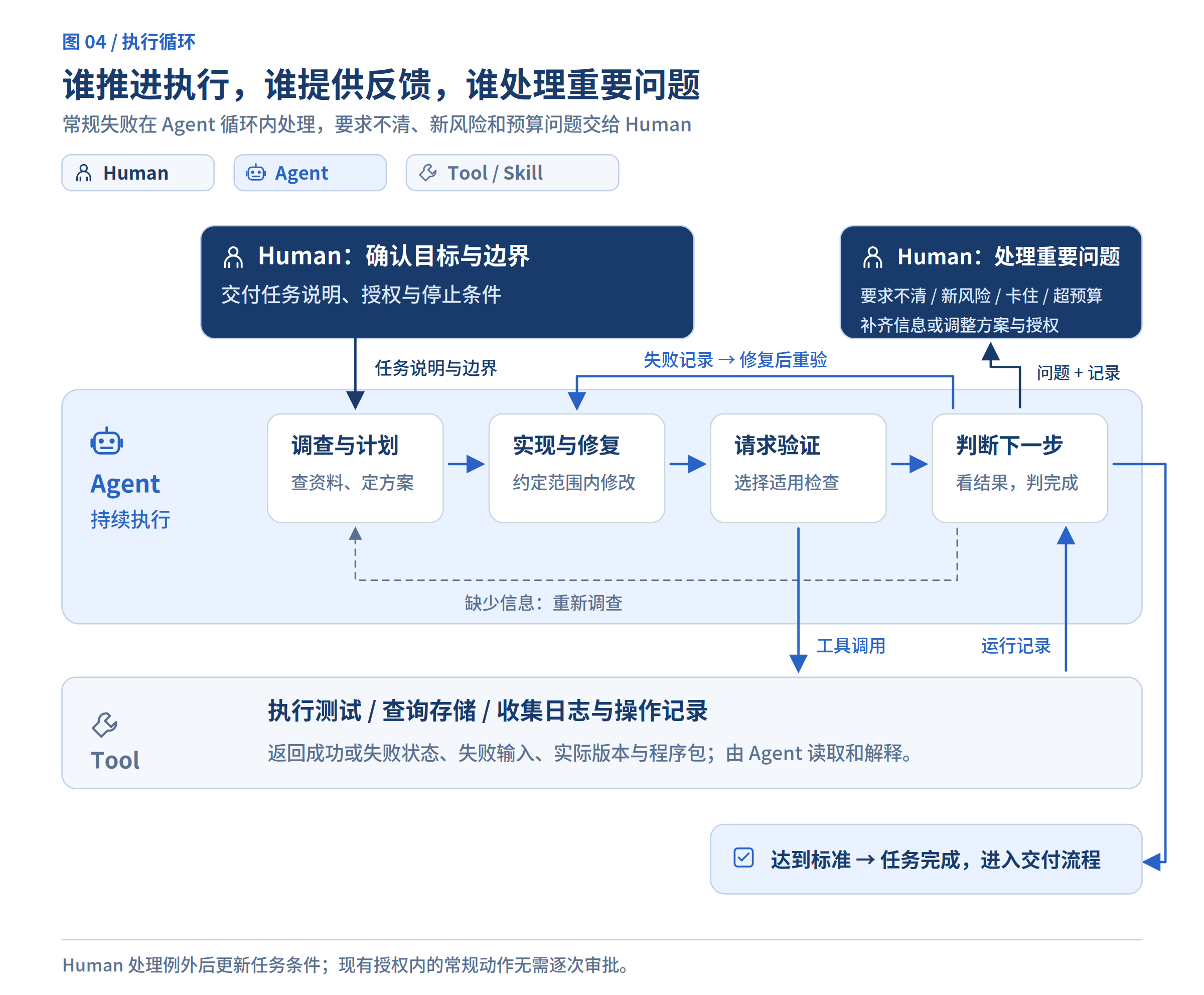
图 4:Agent 负责调查、修改和修复,Tool 返回真实运行结果;Human 说清限制,并决定重要问题怎么处理。达到完成标准后进入交付流程,发现错误就修复,缺少信息就继续调查。
什么时候停下,需要提前约定。可以给自动修复设定时间、费用和尝试次数;要求冲突、检查不可靠或风险明显变大时,也应提前找人。超过预算就如实标明“等待人工决定”或“目前无法继续”。Agent 要交代试过什么、看到什么、还缺什么,以及下一步有哪些选择,让接手的人能够直接判断。
修好代码之后,还要完成交付,并从运行中继续学习。工作区的检查通过后,仍需审查相关代码、确认它和其他模块一起运行正常,再按要求发布。上线发现的问题可以补成新测试。各阶段都要有自己的完成标准,不能把“这一轮测试通过”直接写成“整个任务已完成”。
五、正确性需要独立的验证与审查
测试首先需要回答“怎样才算对”。答案应来自确认过的业务要求。假如代码和测试都把不同客户的请求标识混在一起,两者可能互相吻合,仍然违背数据不能混用的要求。Agent 可以帮助写测试、找边界情况,人需要确认这些检查确实反映业务需要。
不同测试检查不同层面。单元测试看一个函数或小模块;集成测试把代码与真实数据库等组件连起来,检查它们能否配合;端到端测试走完用户下单、保存订单和重试找回结果的完整过程。测试要围绕本次最可能出错的地方选择。
还可以自动生成许多输入和操作顺序,检查关键规则是否一直成立,这叫属性测试;把同样输入分别交给新旧实现,比较结果,叫差分测试。Anthropic 的验证文章讨论了这些方法。[3] 新旧结果不同时,要先分清是新错误,还是本来就允许的变化;旧版本也可能有已知错误,不能直接把它当正确答案。
修复旧问题时,一个有力的检查是:同一个新增测试,在旧版本能重现重复订单,在新版本通过。旧版本必须因为目标问题失败;缺依赖、无法启动或测试自身出错,都不能说明修复有效。对于多个请求同时处理的错误,要记录并控制它们的执行先后;同样的输入未必会产生同样顺序。模拟网络丢包、程序退出等故障时,也要保存触发方法。
数据库阻止重复写入后,还要处理好接下来的事情。如果请求标识与订单分开保存,又缺少可靠的恢复办法,程序可能在只完成一半时退出。如果遇到重复请求就直接报错,客户端可能始终找不回已经创建的订单。测试和审查应检查这些具体情况,以及请求标识过期后的处理。重要的是能发现哪些错误。
验证和审查的分工也要清楚。Human 确认业务规则与完成标准;Author Agent,也就是负责实现的 Agent,重现旧问题、修代码、补测试。工具真正运行检查,保存版本、命令和结果。Reviewer Agent,也就是单独负责审查的 Agent,再对照任务说明、代码和原始记录找遗漏。发现问题后,实现方修复或补充检查,工具重跑,审查方再看。重要风险和业务取舍由 Human 决定,常规修改按已有授权和团队规则推进。
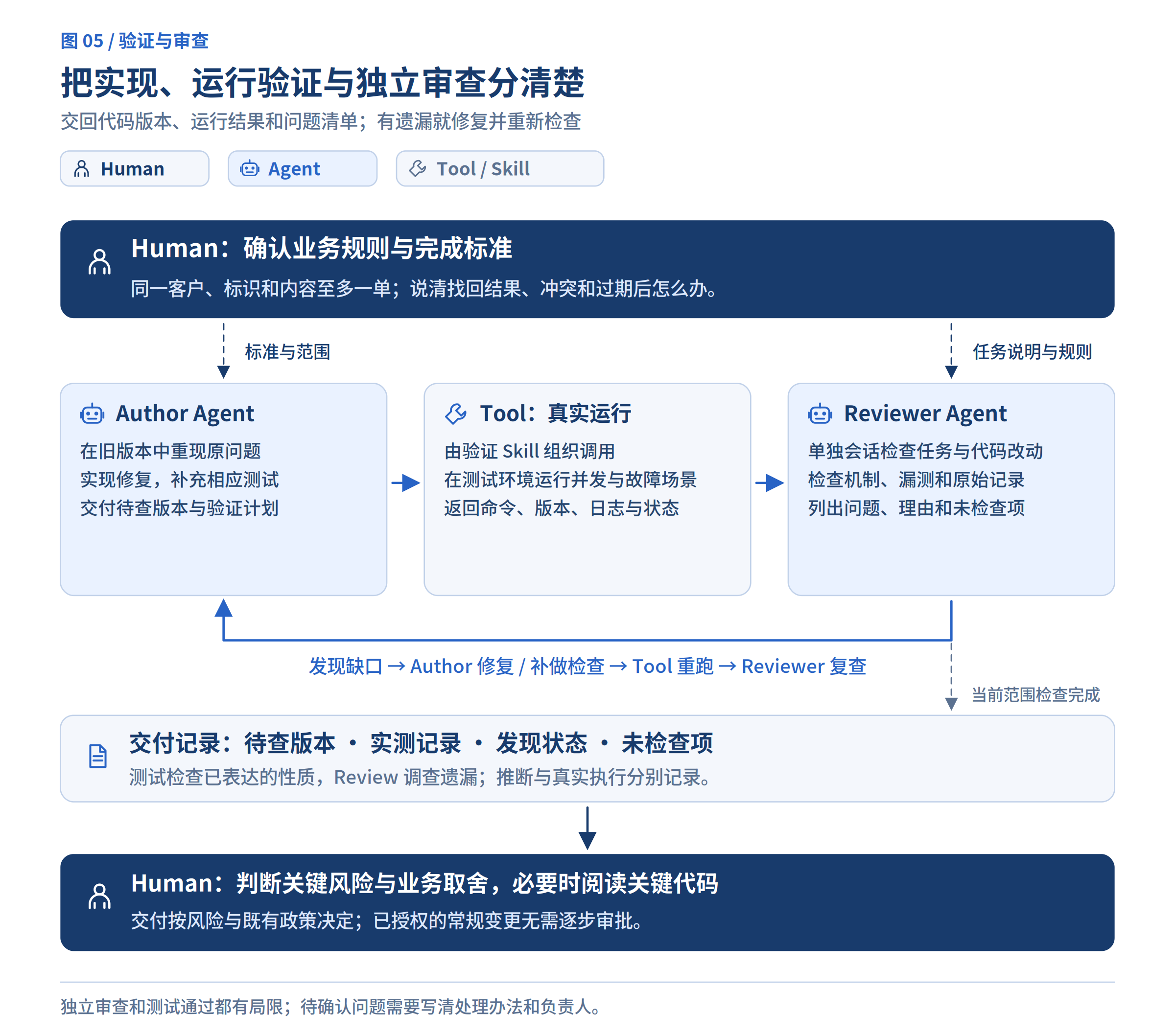
图 5:Author Agent 改代码、准备测试,工具实际运行,Reviewer Agent 单独检查并指出遗漏;Human 确认标准并决定重要风险怎么处理。审查意见和测试结果各有局限,不能互相替代。
代码审查还要寻找测试没想到的问题。Reviewer 应看到任务说明、指定代码版本、相关执行流程和测试记录。每个问题都要写清:什么情况下发生、为什么会错、用户会受到什么影响。例如,“两个请求都先查到没有订单,数据库又没阻止重复写入,于是各创建一单”,就比“这里可能有并发问题”更容易核对。根据代码推测的问题、已经运行确认的问题和仍需调查的风险,要分别标明。
实现与审查可以放在两个单独会话中,测试则由普通程序执行。这样能减少审查方受作者思路影响的程度,但使用相似模型仍可能一起看漏同样的问题。团队可以先安排一个实现 Agent、一套可靠测试和一次独立审查,发现真实不足后再加专项角色。多个 Agent 都说没问题,也仍要对照业务要求和真实运行结果。
审查也要能结束。实现方可以修复问题、说明它为什么不成立,或者请负责人决定是否接受风险。每个问题保留同一个编号,说明怎样处理,再检查修改和相关代码。Anthropic 的实践讨论了误报、重复提问和反复修复的成本。[4] 如果要改检查标准本身,需要单独解释并请人复核,避免为了让本次修改通过而降低要求。
六、交付变更,也交付对应的证据
“全部通过”需要说明通过了什么。准备交付时,应说清为什么改、检查哪个版本、在哪运行、结果如何、发现的问题怎样处理,以及哪些还没检查。这里所说的“证据”,就是测试结果、日志、截图和审查记录等可以核对的材料。Agent 可以写摘要帮助阅读,原始记录要能打开。常规修改简短记录即可,复杂修改再补设计说明和实验。
检查记录要对应实际代码。PR 是提交给团队审查的一组代码修改;它的版本、CI 实际测试的合并版本,以及最后发布的程序包,可能有不同标识,需要记录对应关系。代码、依赖或运行环境改变后,要重新判断旧结果是否还适用。一个版本通过测试,不代表之后的修改或与其他代码合并后也一定通过。
CI,即持续集成,通常会在代码提交或合并时自动构建程序、运行检查。可以按阶段安排不同工作:每轮修改先跑快速检查和相关测试,改动基本完成后再连同数据库等组件一起测试,走完整用户流程并独立审查。共享 CI 还要在干净环境中,检查与其他代码合并后的结果。同步进度和运行耗时的全套测试,可以安排不同触发时机。
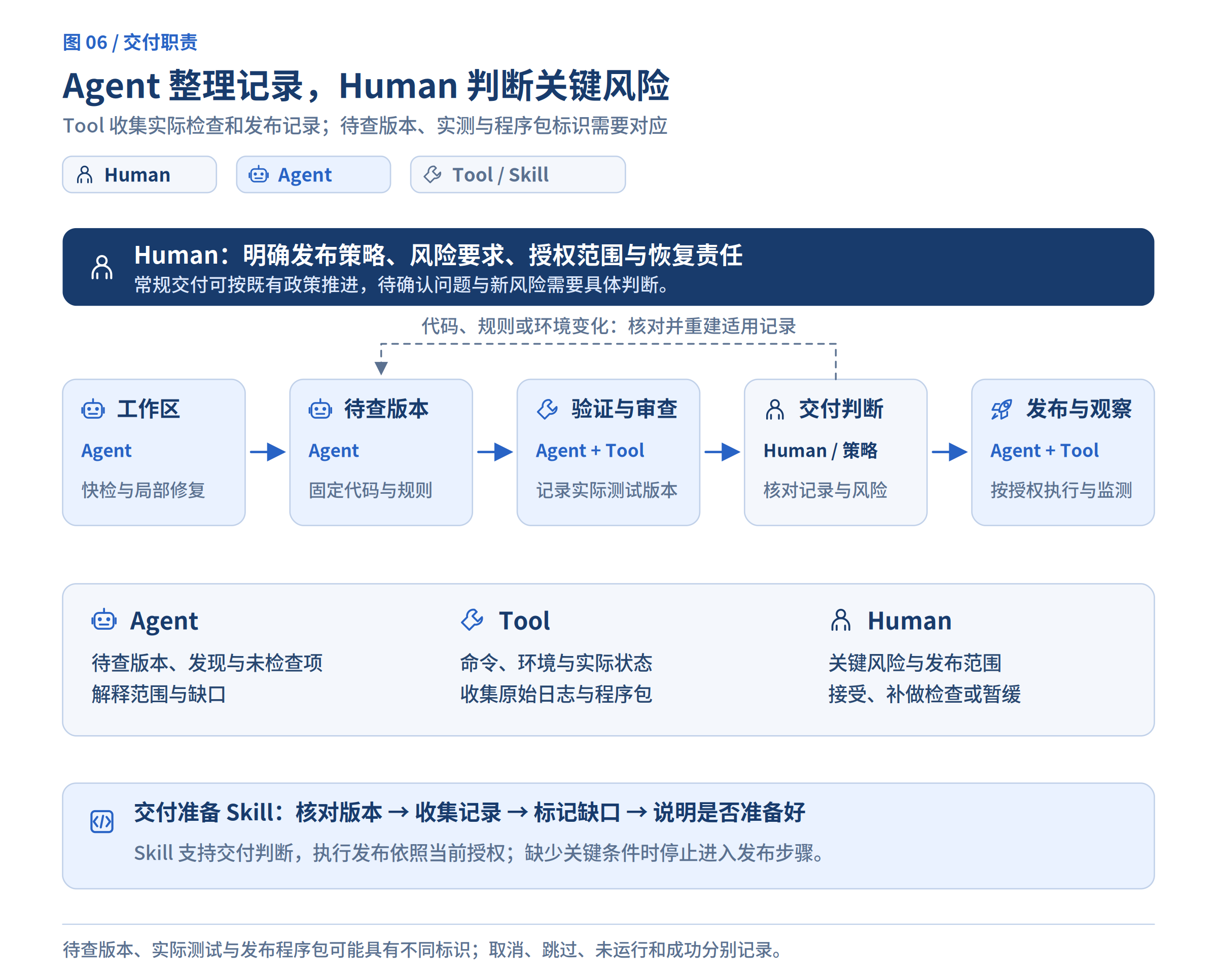
图 6:Agent 准备代码、整理检查记录并说明还缺什么,工具保存真实运行结果,Human 决定重要风险如何处理。发布准备 Skill 帮助判断是否准备好,实际发布按已有授权进行。
可以减少一些重复工作:新版本来了,取消还在检查旧版本的任务;已经下载的依赖尽量重复使用;清楚代码之间的依赖关系后,优先运行受影响的测试。拿不准影响范围时,就扩大检查。取消、跳过、没运行和通过要分开记录。发布程序、迁移数据这类会改变真实状态的操作,还要专门考虑中断后怎样恢复。
交付前要核对:要求的检查是否完成,必须解决的问题是否处理,关键疑问是否有人作出决定。订单修复如果还没做接近实际业务量的长时间测试,就应写出来,并结合发布范围和监控决定下一步。完整记录能帮助负责人快速判断一个绿色状态究竟说明了什么。
交付摘要可以简短列出“目标、版本、检查过什么、没检查什么、审查结果、还有哪些风险”。版本标识、命令和结果链接尽量由工具自动保存,Agent 说明它们与任务有什么关系。负责人既能快速阅读,也能在结果矛盾时找到原始记录,确认当时真正运行了什么。
上线后还要看用户实际遇到了什么,例如有没有重复订单、报错是否增加、响应是否变慢。可以先向少量用户发布,确认正常后再扩大。出错时,换回旧代码、关闭功能、修复数据,以及处理已发生的扣款或通知,是不同的事情。订单不重复创建,也不自动保证扣款和通知不会重复,这些后果都要有人负责。
七、把人的判断放在风险集中的地方
当 Agent 能连续产生修改,人的注意力就需要更有选择地分配。把所有变更都送进同样的人工流程,会增加等待;完全依赖摘要,又会削弱团队对关键系统的理解。一个可用的起点,是按照影响范围和恢复难度决定监督强度,再结合业务重要性、权限变化与未知程度调整。
只影响局部、容易恢复、又已有明确规则的修改,可以沿用成熟检查,在允许范围内推进。如果涉及多个模块配合、同时处理请求、迁移数据,或者会被其他模块照着使用的设计,就需要更深入地读关键代码,确认检查和恢复办法。很小的修改也可能风险很大:少了一行客户范围检查,就可能把不同客户的数据混在一起。
Agent 可以先说明会影响哪里、已经检查什么、出错怎样恢复,Human 再决定需要看多深。风险较低时,Agent 按成熟流程继续,Human 维护规则并抽查;难恢复或影响很广时,Agent 多做重点测试,Human 仔细看关键代码、数据处理和发布范围。
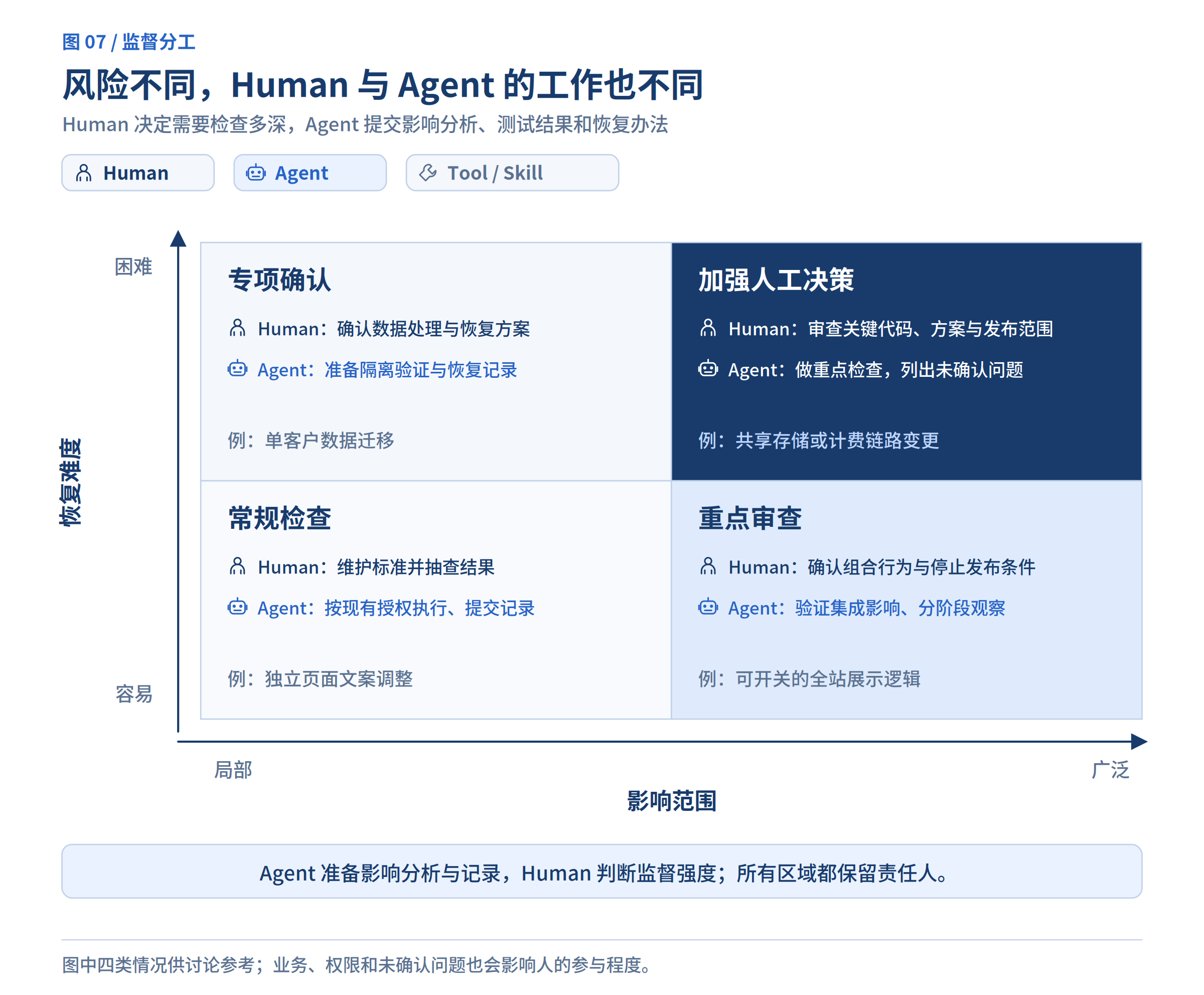
图 7:图中四种情况分别写出 Human 要判断什么、Agent 要做什么。各类任务都要有负责人和必要检查;业务特点、权限变化与尚未弄清的问题,仍需单独考虑。
人的工作可以集中在四处:确认这件事是否值得做,说清关键业务规则,处理仅靠检查无法解决的分歧,以及承担上线后的责任。这些判断也会发生在中途。例如,现有接口无法找回订单结果时,需要讨论是否调整接口;缺少必要测试环境时,需要决定补建环境、缩小范围,还是暂缓交付。
负责人也要学会读检查记录:最重要的错误情况有没有测到?结果是否对应当前版本?还有什么可能漏掉?出错后怎样发现并限制影响?必要时回到关键代码确认。团队还可以通过模块说明、设计讨论和轮换维护,持续了解系统,才能判断 Agent 给出的解释是否可信。
交给 Agent 的工作,可以随着检查和恢复能力逐步增加。先让它完成范围清楚的任务,确认结果可靠、重要问题能及时找人,再让它承担更长的流程。人工确认应该放在真正需要判断的地方。常规动作反复请示会消耗注意力;新风险、额外权限和业务取舍,则需要清楚地交给负责人。
八、让每次交付改善下一次开发
团队还需要从过去的错误中改进下一次开发。重复订单事故可以补成一个测试;含糊的数据库错误可以促使工具输出更清楚的信息;审查漏掉的问题可以留作下次检查审查能力的例子。先弄清原因,再选择合适的改法,经验才能真正用起来。
能写成明确条件的要求,可以变成测试;反复出现、能够识别的问题,可以加入自动代码检查或审查规则;重复操作可以写成脚本和 Skill;设计背景与业务约定可以放进对应文档。OpenAI 的维护案例展示了 Agent 查找过时代码、不再需要的实验和测试问题,并提出修改的做法。[5] 帮助开发的工具和流程,也可以继续让 Agent 改进。
改进这些工具和规则时,Agent 先根据运行记录提出建议,Human 确认原因、价值和维护人,再由 Agent 实现并重新检查。新 Skill 可以先在小范围使用,看看结果是否稳定,会不会把正常修改当成错误,或者造成重复工作和不必要的人工接管。
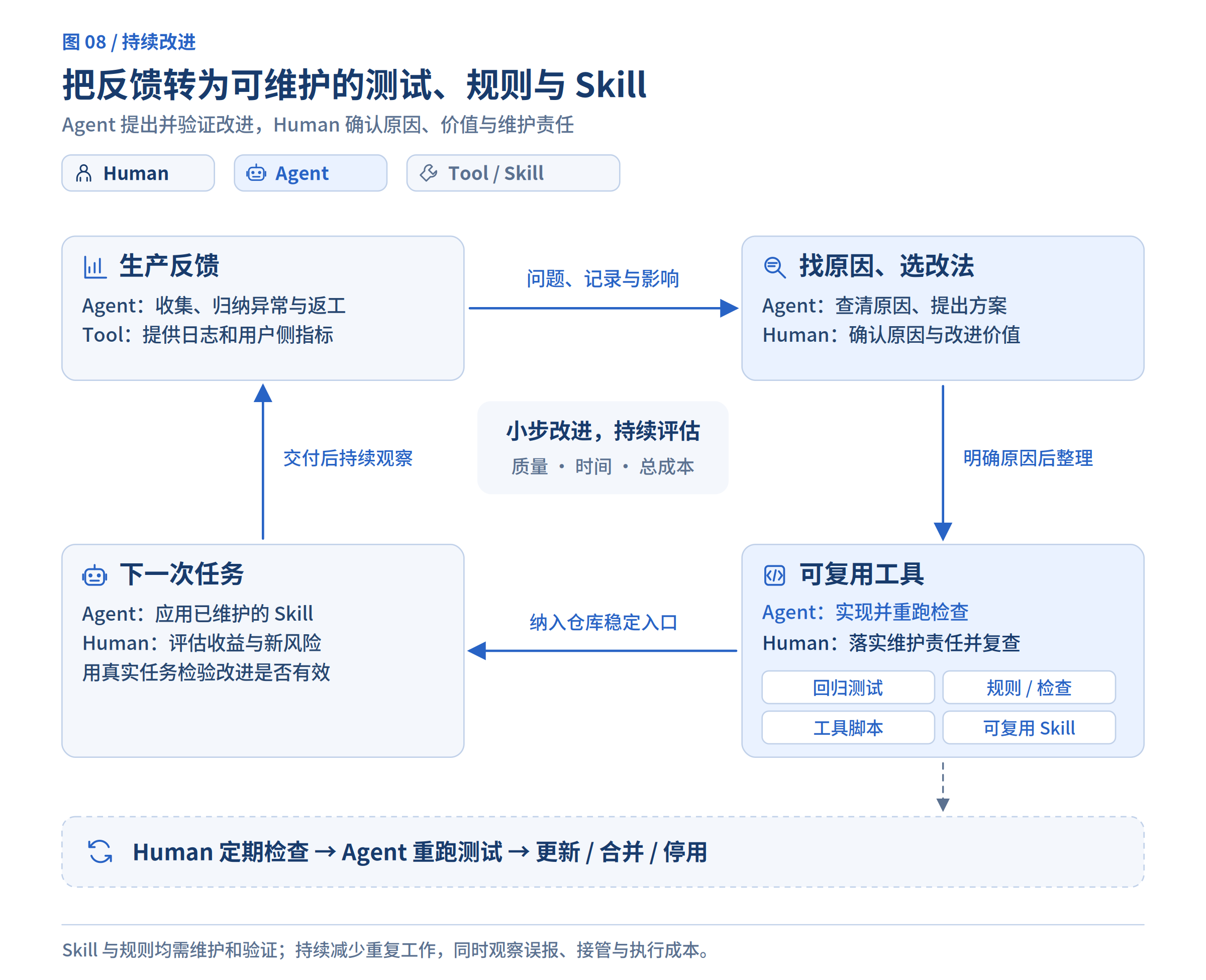
图 8:Agent 收集问题、提出改法并检查效果,Human 确认原因、价值和负责人。测试、规则与 Skill 用在下一次任务中,也需要定期检查、更新和停用。
每条规则都需要维护:什么情况下使用、适用哪里、谁负责,都要写清楚。检查审查能力时,既要用过去出过错的例子,也要用本来没问题的修改,看它会不会漏掉错误,或把正常修改误判为错误。后者叫误报。可以用一部分例子改进规则,另一部分留着检验效果。失效、重复或成本太高的规则,应更新、合并或停用。
看效果时,要同时记录需求确认到上线用了多久、人花了多少时间、自动检查和模型调用花了多少钱,以及上线后出了多少问题。如果少做审查省下的时间,后来全花在处理事故上,总成本仍可能增加。代码行数、Agent 数量和 PR 数量只能说明一部分情况;比较时还要说明任务类型,以及统计了多长时间。
可以先挑一种经常遇到、范围清楚的任务。写好任务说明,准备好启动和检查命令,让 Agent 完成实现、测试和一次独立审查;再整理交接记录、自动检查和小范围发布步骤。哪里反复出错,就补相应规则、工具或专门的审查。每一步记录质量、等待时间和成本,才能和原来的做法比较。
AI-native 软件开发需要形成稳定的协作:人说清目标,Agent 根据结果继续工作,工具留下真实记录。团队知道哪些已经检查、哪些还没弄清楚,也知道该由谁作最后判断。把这些事情做好,模型能力的进步才会持续转化为可靠、好维护的软件。
参考资料
- Louis Claxton. The AI-native SDLC playbook. Anthropic, 2026-08-21.
- Tony Alaniz. Iterating Development Workflows with Codex. OpenAI Cookbook, 2026-08-03.
- Addy Osmani. How the Claude Code team thinks about verification. Anthropic / claude.dev, 2026-11-16.
- Addy Osmani, Morgan Westlee Lunt, Qing Wang. How the Claude Code team does code review. Anthropic / claude.dev, 2026-10-15.
- Rodrigo Roim. Maintaining software with the GPT-6 family. OpenAI Developers, 2026-10-14.
AI-native Software Development: From Intent to Reliable Delivery
A developer asks a coding agent to “fix duplicate order creation.” The agent quickly changes the code, and the tests pass. Before merging, however, the team realizes that several questions remain unanswered. Could two simultaneous requests both conclude that no order exists yet? What happens when the server saves an order but the client never receives the response and tries again? If the change goes wrong, will reverting the code also restore the data?
This scenario illustrates a central change that AI brings to software development. As implementation gets faster, teams need to be more explicit about what to build, how to check it, and who is responsible when something goes wrong. These pieces have to work together before generated code becomes useful software.
In this article, AI-native software development means organizing work among people, agents, and tools: people set goals and boundaries; agents read project information, use tools, and continue working in response to results. Tools leave records that can be checked, and teams use the outcomes to improve the next round of development. In the figures, Human means a developer or accountable owner, and Tool means testing, build, and other engineering tools. The exact division of work should reflect the project’s risks and the team’s circumstances.
One example runs throughout: a user submits an order, receives no response, and retries. How should the system avoid creating a duplicate? This involves idempotency: within an agreed scope, repeating the same request does not create another order. The example, task descriptions, and diagrams illustrate an approach; they are not reports of a deployed project or measured gains.
1. AI-native development changes how work is organized
Software development involves a series of questions. What do users need? How should the system respond? Which existing behaviors must keep working? How will the team recover from an error? Writing code is one part of this work. Even when coding gets faster, discussing requirements, checking results, and coordinating a release still take time. A team with unclear requirements, slow tests, or little visibility into production may quickly accumulate more changes waiting for review.
Anthropic’s AI-native SDLC playbook covers planning, design, building, testing, deployment, and maintenance, arguing for changes across the development lifecycle. [1] Teams can follow a feature from idea to release and reconsider who supplies information, who executes, who checks the results, and who owns the outcome. The useful measures are how quickly reliable functionality reaches users and how much human effort and computing cost it takes.
For the same feature and completion criteria, one change is easy to visualize: agents can shorten coding, debugging, and local fixes. Figure 1a holds the other stages constant to show how requirements discussions, design, testing, review, and release waiting time take up a larger share once implementation becomes faster.
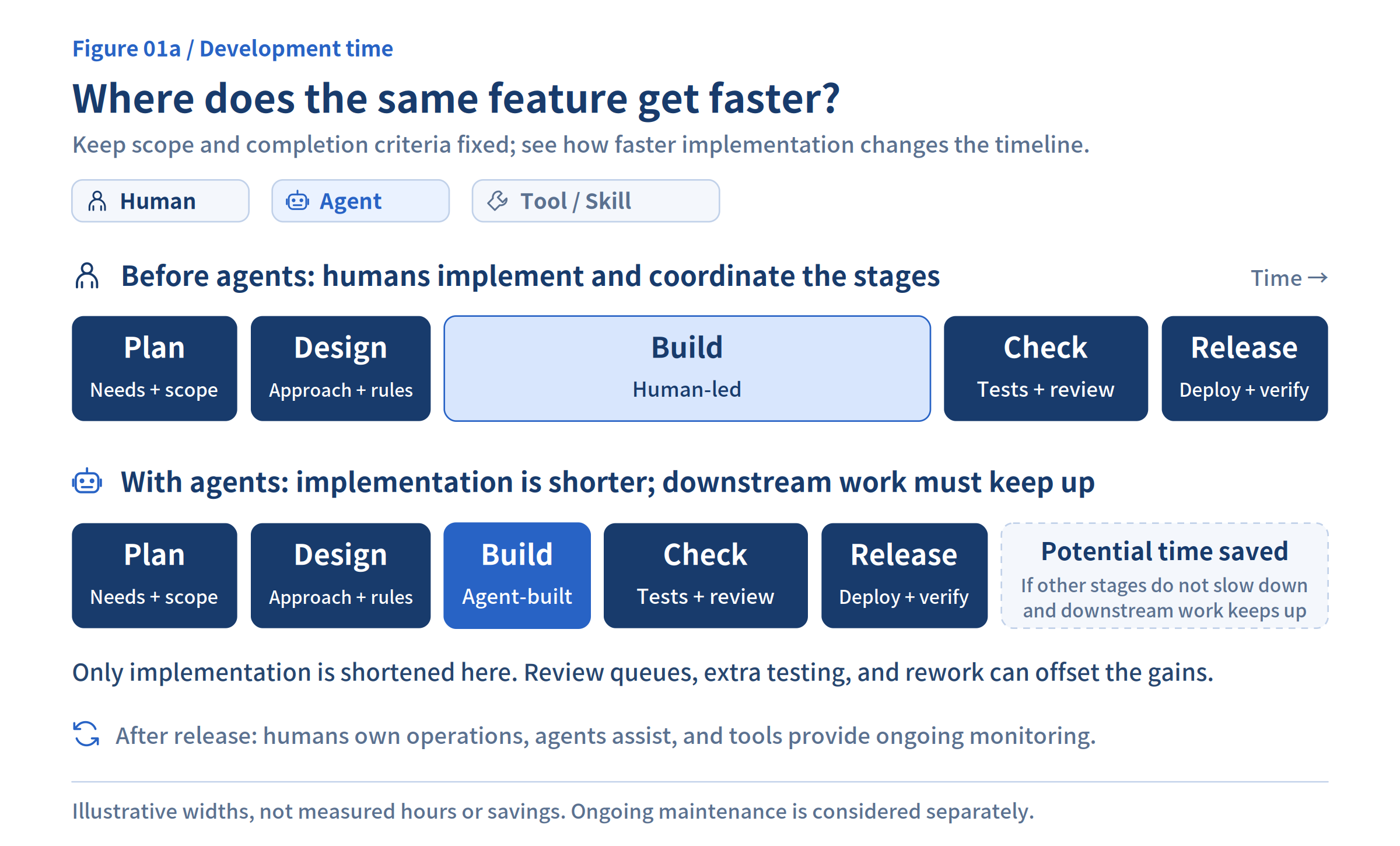
Figure 1a. An illustration of development time for the same feature. Only implementation is shortened; widths do not represent measured hours. The dashed area shows time that could be saved if downstream work keeps up. Ongoing maintenance after release is considered separately.
Whether that time is actually saved depends on what happens next. Review queues, additional testing, and rework can offset the gains. Teams therefore also need to improve checking, handoffs, and release practices.
An agent can trace a user request to the relevant code, propose an approach, change the implementation, add tests, and continue fixing failures. The repository, runtime environment, and testing tools let this work happen and leave records. People still need to judge whether the goal makes sense, whether the business requirements are accurate, and whether new information calls for a different approach. Handoffs among these participants need to be clear.
Traditional development already makes extensive use of scripts, automated tests, continuous integration (CI), and monitoring. Developers usually break down tasks, choose tools, interpret results, and decide what happens next. AI-native development delegates more of this coordination to agents. Humans set the goal and permitted scope; agents investigate, execute, and check their work over multiple steps; humans handle important tradeoffs and new issues. Tools must be easy to call and their results easy to understand for agents to make sustained progress.
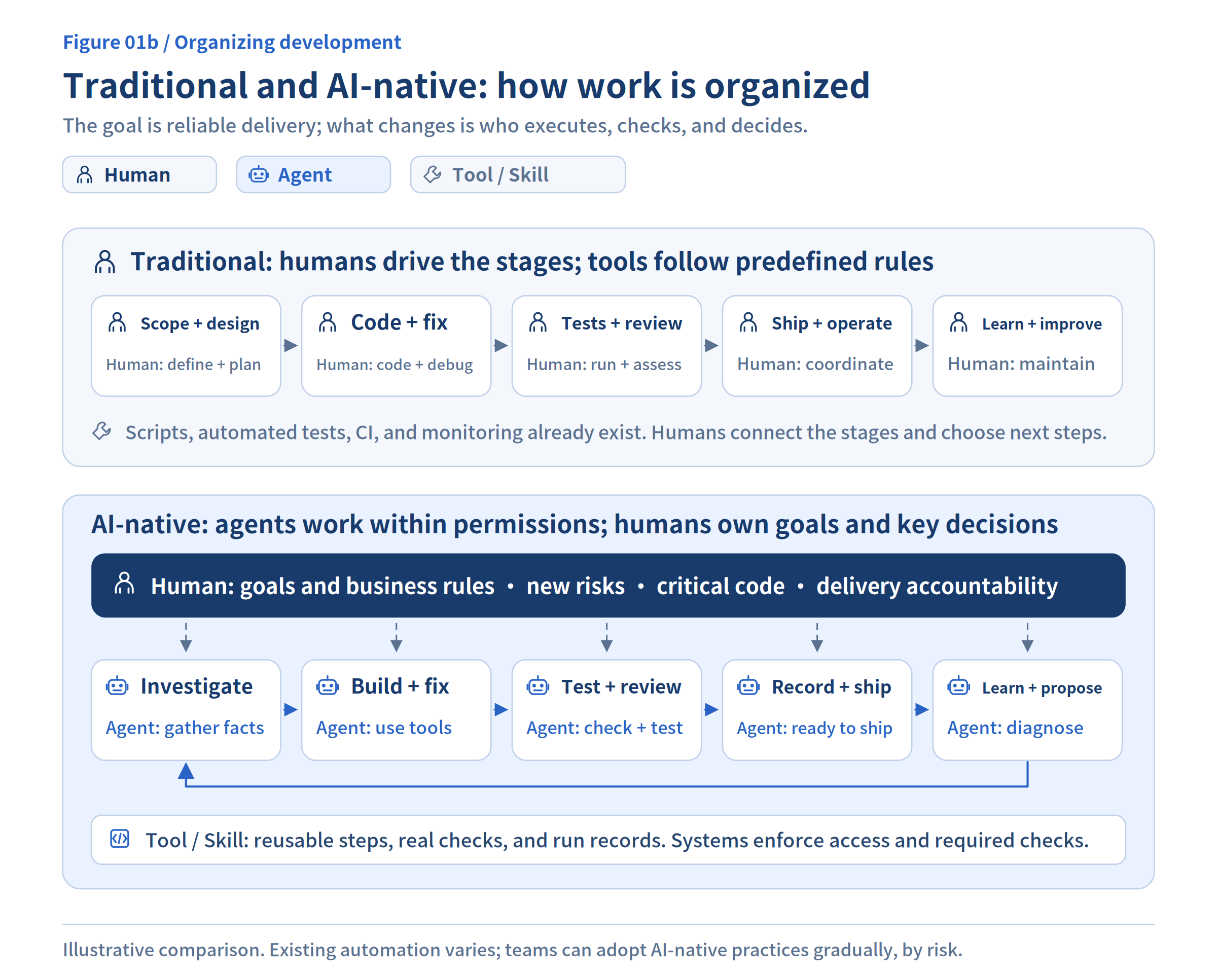
Figure 1b. In traditional development, people drive work across stages and tools provide automation. In AI-native development, agents continue working within their authorization while humans retain responsibility for goals, key requirements, and risk decisions. Both approaches use testing, CI, and monitoring.
In the order example, “reduce duplicate orders” starts as a business intent. The team still needs to define a duplicate, establish the boundaries of retry behavior, and decide which API behaviors may change. The agent can then find the defect and implement a solution. If those details exist only in a colleague’s memory, the model has to fill the gaps with assumptions based on a small part of the code. If those assumptions are wrong, further generation and checking can continue in the same wrong direction.
Teams should gradually turn decisions that once lived in conversations and personal experience into task descriptions, API agreements, tests, and diagnostic tools. Agents and other team members can then use that knowledge. People must also keep learning the system so they can recognize when its documentation, rules, or tests no longer match real needs.
2. Turn human intent into an actionable task
“Fix duplicate orders” is enough to start a discussion, but not enough to guide a complete implementation. Duplicates may come from repeated clicks, a client retrying after a timeout, or a message being delivered twice. These cases have different boundaries. An actionable task should explain what this change solves, what may be changed, which conditions must always hold, and how completion will be judged. Here, this set of agreements is called a task description.
For example, a client can attach a request identifier to each order submission and reuse it on retries. This identifier is an idempotency key. A system serving several businesses or teams must also identify which organization a request belongs to. Such a customer organization is commonly called a tenant; “customer” below refers to that organization. Business and engineering owners need to confirm a few rules:
- Within the agreed validity period, the same customer, key, and request content create at most one order. Once processing finishes, a retry can retrieve that same order and the agreed result.
- Reusing the key with different content produces an explicit conflict.
- Requests and data belonging to different customers remain separate.
- While a request is still being processed, the system may wait or return an agreed “retry later” status. Behavior after the key expires must be defined separately.
Failure recovery matters too. The server may save an order and then lose its response in the network. A retry must be able to find the completed result. A requirement that only says “do not create another order” could lead to rejecting every retry while leaving the user unsure whether the order succeeded. The design must address both duplicate prevention and result retrieval.
A useful order of thought is to establish the goal, investigate the relevant facts, identify the business rules that must hold, and then define how completion will be checked. Humans confirm the goal and key rules. Agents investigate facts, develop the approach, and list unanswered questions. Permissions and stop conditions apply throughout: every read, change, and tool call must remain within the permitted scope. Unclear requirements, repeated failure, or new risks go to a human for judgment. New findings can also lead back to an updated task description.
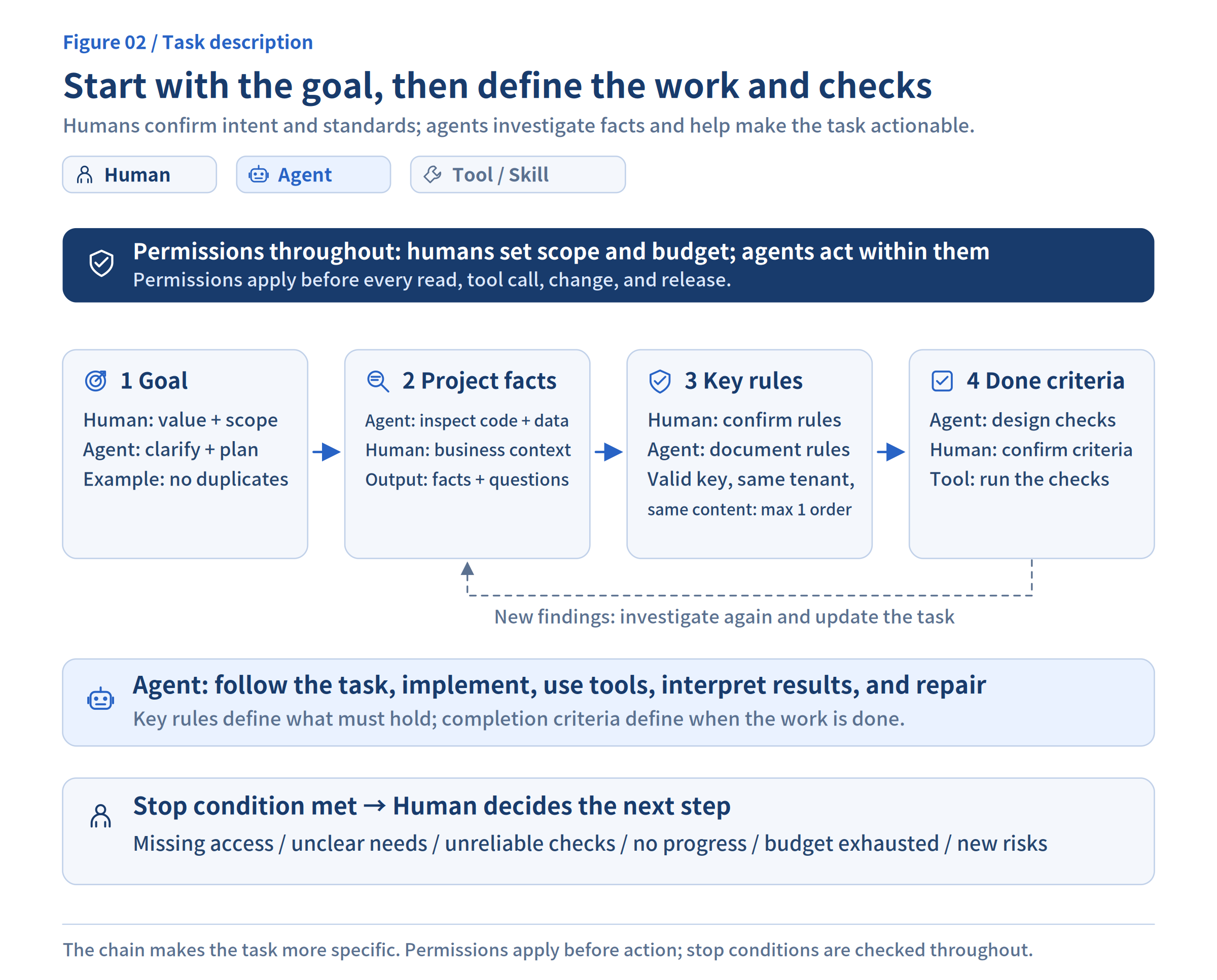
Figure 2. Move from “what should we do?” to “what must we learn?”, “which rules must hold?”, and “how will we know we are done?” Humans confirm key requirements; agents investigate and execute. Permissions and stop conditions apply throughout, and existing standards can be reused.
Completion criteria must be checkable in practice. These are also called acceptance criteria. For example, send several requests at the same time and count the resulting database orders. Simulate a successful save followed by a lost response and check whether the retry returns the same order. The task should also point the agent to API documentation, table definitions, past issues, and commands. OpenAI’s workflow example organizes goals, plans, stage-specific information, and execution records separately; the file structure can be adapted to the project. [2]
The task description should evolve as the investigation proceeds. If old clients do not send a request identifier, or existing data cannot support result retrieval, the team needs to reconsider compatibility and the scope of this change. Record new findings, decisions, and changes to completion criteria so implementers, reviewers, and owners work from the same agreement. Discussion can happen in chat; settled decisions should be easy to find in the task record or repository.
The task should also state how far the agent may go. It can change code and add tests within the agreed scope. If it needs a new database table, a different external calling convention, or changed checking requirements, it should present a concrete proposal to someone with the authority to decide. Routine actions already permitted can continue. Conflicting requirements, repeated lack of progress, or an exhausted budget should have a named escalation path. A few paragraphs are enough for small tasks; more complex changes need more detail.
3. Give agents an environment they can work in
Even a capable model can get stuck in an incomplete engineering environment. Startup commands no longer work. Tests depend on a particular laptop’s configuration. An error says only “timeout.” Project rules are scattered across several places. People may work around these obstacles from experience, while an agent repeatedly experiments. That raises costs and makes it easier to change the wrong code or misdiagnose a failure.
Start with project information that is easy to find. The repository should have a short entry point explaining what the system does, how its modules fit together, where common commands live, and which areas need special care. Keep details near the relevant modules and link to them reliably. Documentation should explain where it applies and change with the code. Putting every historical detail into one long prompt makes information that matters to the current task harder to identify.
Next, make common operations repeatable. Building, testing, starting services, and preparing data need clear commands, dependency instructions, and meaningful success or failure results. The order example needs a separate test environment with a real database that cannot alter production data. Tools should retain request inputs, specific check results, database state, and important logs so the agent can tell what went wrong.
Repeated work can be organized into a Skill: a reusable set of working instructions for an agent. Tools perform actions such as searching code, running tests, and querying a database. A Skill explains when to use them, in what order, what results to save, and when to stop. The agent selects and follows it; humans check that its steps and permissions are appropriate. A Skill may call scripts and reference documentation, but it does not grant additional permissions. Its instructions also need maintenance.
A practical starting point is four small Skills for recurring work. Their names and details can be adapted to the repository:
| Skill | Agent’s work | Tools to prepare | Handoff and stop conditions |
|---|---|---|---|
| Project investigation | Find relevant code, business rules, and open questions | Repository search, Git, project documentation | Source locations and questions; escalate missing access or conflicting requirements |
| Change verification | Reproduce the original issue, check the fix and existing behavior | Test tools, a dedicated database, logs, and screenshots | Version, commands, and results; stop blind retries when failures cannot be explained |
| Independent review | Check a specific version against the task description and look for omissions | Code diff, code search, a separate test environment | Findings, reasoning, and unchecked areas; escalate business tradeoffs |
| Release preparation | Match code versions, check results, and recovery plans | CI, the release build, monitoring, and checking scripts | Readiness and remaining gaps; pause if essential conditions are missing |
Each Skill should state its required information, steps, outputs, and escalation conditions. Operations governed by fixed rules are often best handled by ordinary scripts. Agents choose steps, interpret results, and handle new situations. The system that runs the tools must still enforce permissions and required checks. Start by making the most common checking workflow reliable, then improve it gradually.
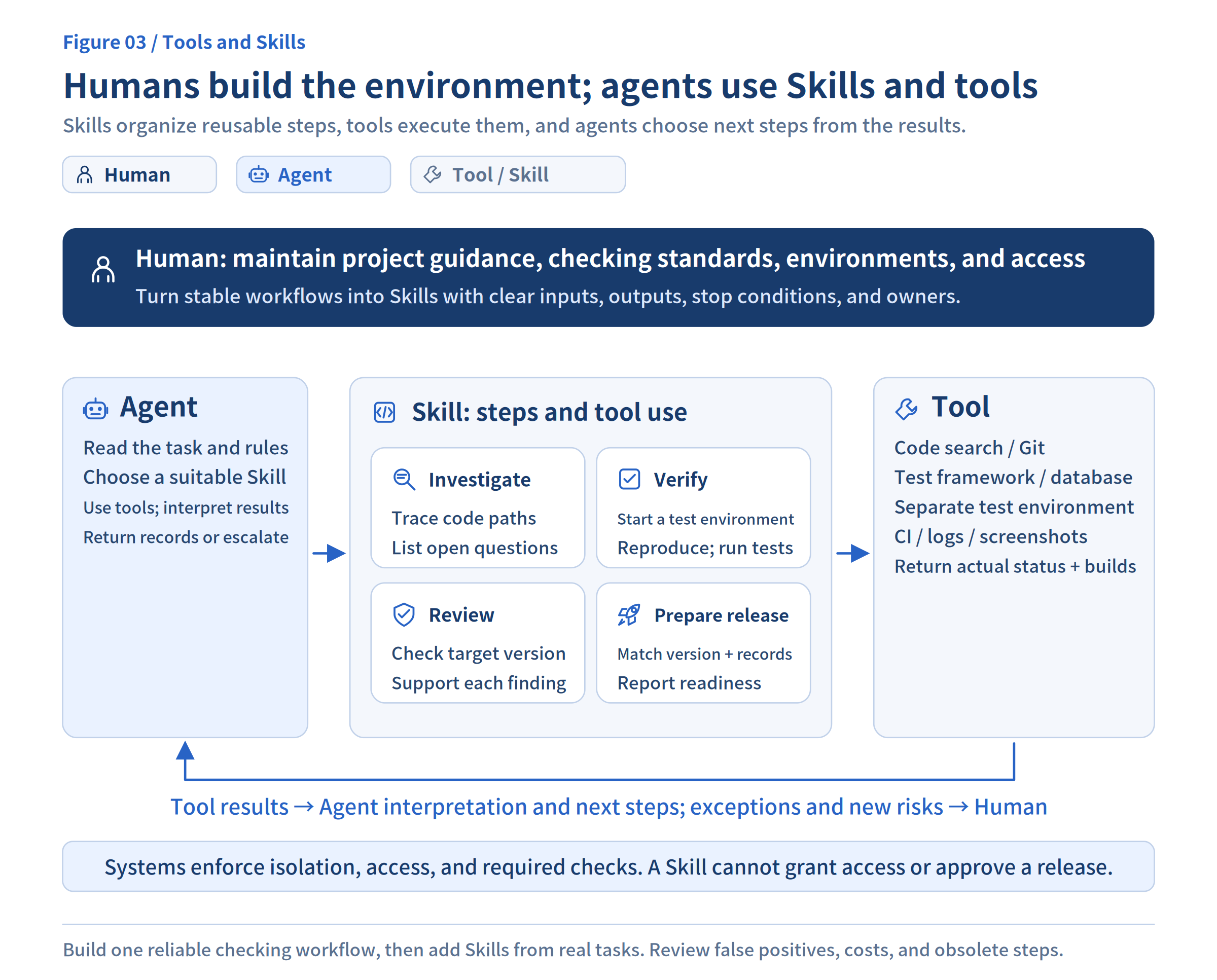
Figure 3. Humans maintain the environment, rules, and authorization. Agents use suitable Skills, Skills organize the steps, and tools carry out actual actions and return records. Permission controls apply to every call.
Agents also need to see how the software behaves. For a UI change, supply screenshots, interaction steps, and network requests. For a backend change, supply logs, database results, and inputs that reproduce the error. A timeout may come from code, an external service, or leftover test data. Results that help explain the cause make a correct fix easier. After each change, check that existing features still work; these checks are usually called regression tests.
Separate workspaces and suitable permissions matter as well. Independent code directories, temporary databases, and environments that can be recreated make parallel investigation, version preservation, and undoing changes easier. Permissions should match the task and be enforced by tools and systems. Improve the most common startup, testing, and diagnosis steps first, then add tools in response to actual problems. This makes additional agents able to do useful work.
4. Keep execution moving through feedback
To complete a task over multiple steps, an agent needs to keep revisiting the goal, choosing an action, reading the result, updating its judgment, and stopping when appropriate. It usually starts by investigating the current behavior and planning implementation and checks, then makes a small change, runs it, analyzes failures, and repairs the code. Each round should add information: where the error occurs, which earlier assumption was wrong, or why the next action makes sense.
Consider concurrency, when two requests arrive at the same time. The agent can design a small experiment that lets both requests read “no order exists” before either continues. If the old version creates two orders, the team has reproduced the original issue. A database uniqueness constraint can block duplicate records. A transaction treats related database operations as a unit: they succeed together or are rolled back together. Their use depends on the existing design. Adding another existence check in application code can still let both requests see no order and then each write one.
Every failure should affect the next step. If a result violates business requirements, investigate the code. If a test contradicts the task description, reconcile the standard first. If the database cannot be reached, inspect the environment. For an intermittent error, record the conditions and try to make it reproducible. Repeating the same command until it happens to pass neither explains the problem nor helps the agent avoid working around a real defect.
The division of work becomes clearer when each handoff is explicit. Humans provide the task description and permitted scope. The agent investigates, changes code, uses tools, and explains the results. Problems it can fix independently remain in the loop within budget; on completion, it returns the code version and execution records. When additional authority is needed or a disagreement cannot be resolved, it reports what it tried, where it is stuck, and which decision is needed. A human supplies information or adjusts the approach, and the agent continues. Routine actions do not need repeated approval.
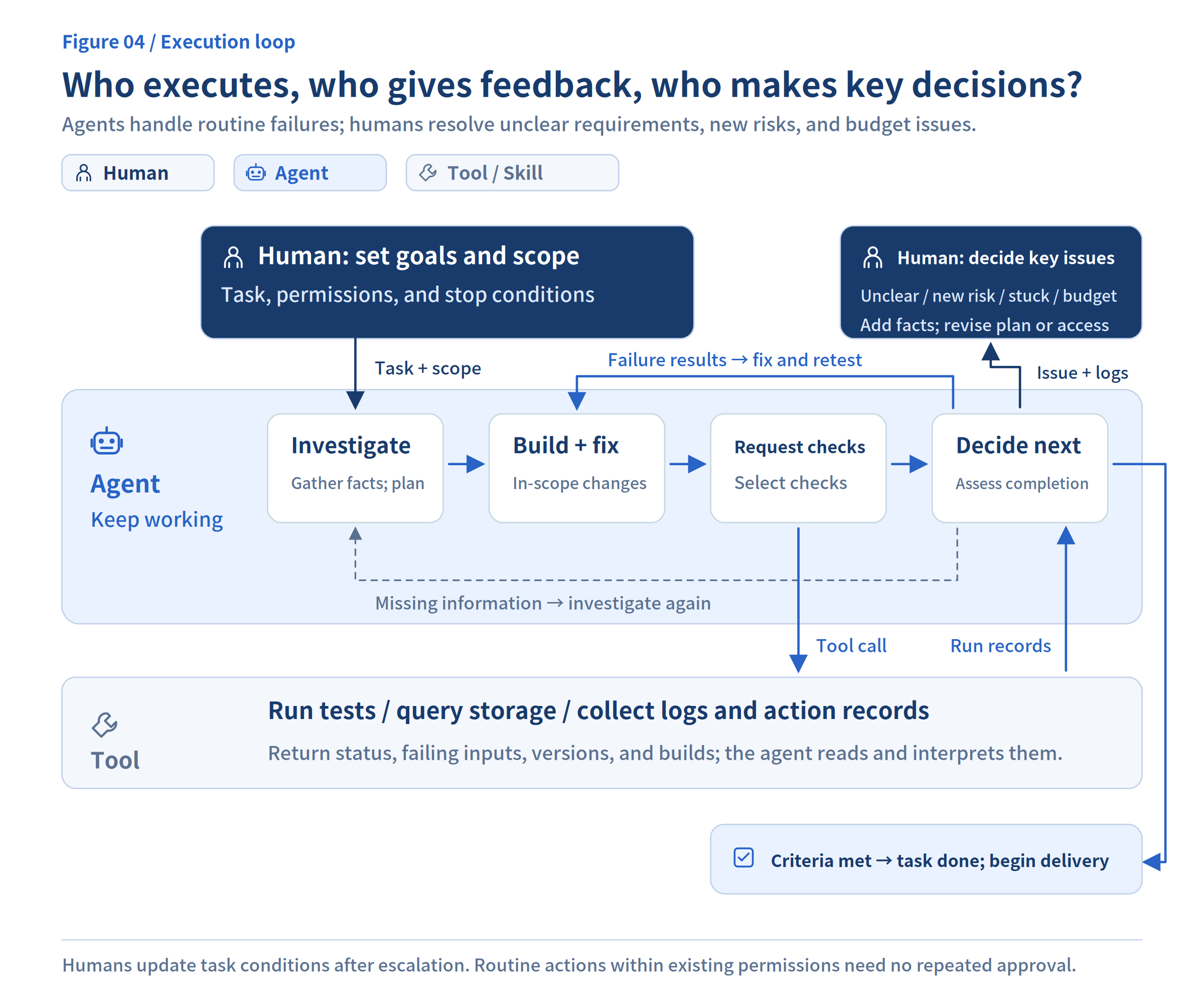
Figure 4. The agent investigates, changes code, and fixes failures. Tools return actual execution results. Humans set boundaries and decide important unresolved issues. Meeting the completion criteria leads to delivery; errors lead to repairs; missing information leads to further investigation.
Agree on stopping conditions in advance. Automated repair can have time, cost, and attempt limits. Conflicting requirements, unreliable checks, or a substantial increase in risk should trigger earlier escalation. When the budget is exhausted, report “awaiting human decision” or “unable to proceed.” The agent should explain what it tried, what it observed, what is missing, and the available next steps so someone can take over without starting again.
Fixing the code is followed by delivery and learning from actual operation. After workspace checks pass, relevant code still needs review, integration with other modules needs checking, and release requirements must be met. Problems found in production can become new tests. Each stage needs its own completion criteria: “this round of tests passed” is not enough to declare the entire task complete.
5. Correctness needs independent verification and review
Testing begins with “what counts as correct?” The answer should come from confirmed business requirements. If the code and tests both mix up request identifiers from different customers, they may agree with each other while violating data separation requirements. Agents can help write tests and identify edge cases; people need to confirm that those checks express the actual business need.
Different tests examine different levels. Unit tests check a function or small module. Integration tests connect code to components such as a real database and check that they work together. End-to-end tests follow the complete user flow of submitting an order, saving it, and retrieving the result on a retry. Choose tests around the failures most likely to matter for this change.
Tests can also generate many inputs and operation sequences to check that key rules always hold; this is property-based testing. Running the same inputs through old and new implementations and comparing their results is differential testing. Anthropic’s verification article discusses these methods. [3] A difference may be a new bug or an intended change. The old version may also contain known defects, so it cannot automatically serve as the correct answer.
For a bug fix, a useful check is a new test that reproduces the duplicate order in the old version and passes in the new one. The old version must fail because of the target defect. Missing dependencies, startup failures, or a broken test do not establish that the fix works. For concurrency bugs, record and control the order in which operations run: the same inputs do not necessarily produce the same timing. When simulating packet loss or process termination, preserve the method used to trigger the failure.
Preventing duplicate database writes is only part of the problem. If the request identifier and order are saved separately without reliable recovery, the process may stop after completing only half the work. If a duplicate request simply produces an error, the client may never retrieve the order that was already created. Tests and review should examine these cases and behavior after the identifier expires. What matters is which errors the checks can detect.
Verification and review also need clear ownership. Humans confirm business rules and completion criteria. The Author Agent, responsible for implementation, reproduces the old issue, fixes the code, and adds tests. Tools run the checks and save versions, commands, and results. A separate Reviewer Agent compares the task description, code, and original records to look for omissions. When it finds a problem, the author repairs it or adds checks, tools rerun them, and the reviewer examines the result. Humans decide important risks and business tradeoffs. Routine changes proceed under existing authorization and team rules.
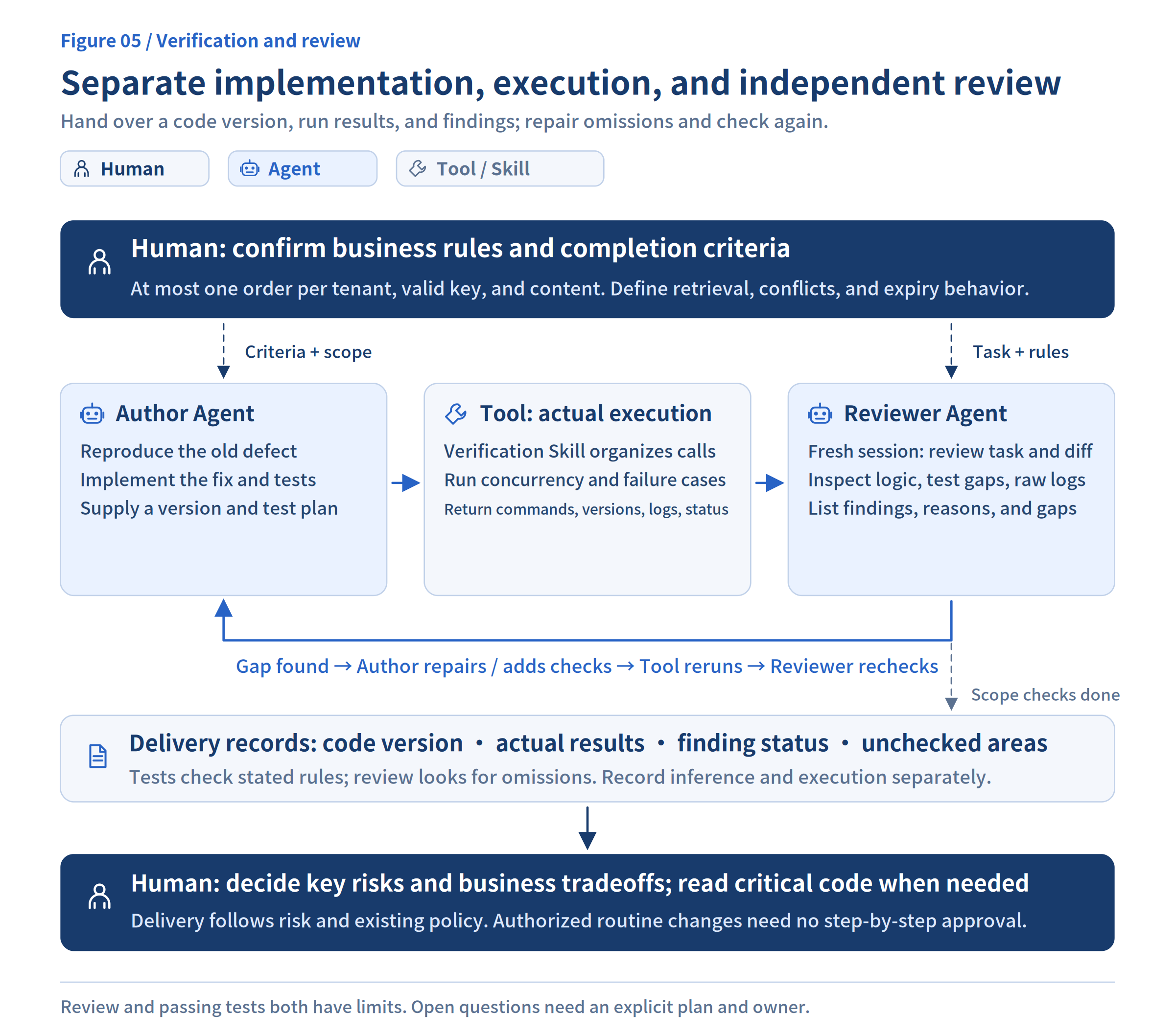
Figure 5. The Author Agent changes code and prepares tests; tools execute them; the Reviewer Agent independently looks for omissions. Humans confirm the standards and decide how to handle important risks. Review findings and test results have different limits and do not replace each other.
Code review should also look for problems the tests did not anticipate. The reviewer needs the task description, a specific code version, relevant execution paths, and test records. Each finding should state the trigger, why the code fails, and the user impact. “Both requests see no order, and the database does not block duplicate writes, so each creates one” is easier to assess than “there may be a concurrency issue.” Distinguish findings inferred from code, failures confirmed by execution, and risks that still need investigation.
Implementation and review can use separate sessions, with tests executed by ordinary programs. This reduces the reviewer’s exposure to the author’s assumptions, but similar models can still miss the same errors. A team can start with one implementation agent, reliable tests, and an independent review, then add specialist roles when actual gaps appear. Agreement among several agents still needs to be checked against business requirements and real execution results.
Review also needs a path to closure. The author can fix a finding, explain why it does not apply, or ask an owner whether to accept the risk. Keep a stable identifier for each finding, record how it was resolved, and recheck the change and related code. Anthropic’s review practice discusses the costs of false positives, repeated findings, and repeated repairs. [4] Changing the checking standard itself needs a separate explanation and human review, so requirements are not weakened just to make the current change pass.
6. Deliver the change and the evidence behind it
“Everything passed” needs to explain what passed. Before delivery, record why the change was made, which version was checked, where it ran, what happened, how findings were resolved, and what remains unchecked. Here, evidence means inspectable material such as test results, logs, screenshots, and review records. An agent can summarize it, but the original records must remain accessible. Routine changes need brief records; complex ones may also need design notes and experiments.
Check records must correspond to the actual code. A pull request (PR) is a proposed set of code changes submitted for team review. Its revision, the merged revision tested by CI, and the final release build may have different identifiers; record how they relate. When code, dependencies, or the environment changes, reassess whether earlier results still apply. Passing tests for one version does not establish that later edits or integration with other code will also pass.
Continuous integration (CI) typically builds software and runs checks when code is submitted or merged. Different stages can do different work. After each edit, run fast checks and relevant tests. Once the change is mostly complete, test it with components such as the database, exercise the full user flow, and obtain independent review. Shared CI should also check the result of merging with other code in a clean environment. Progress updates and expensive full test runs can have different triggers.
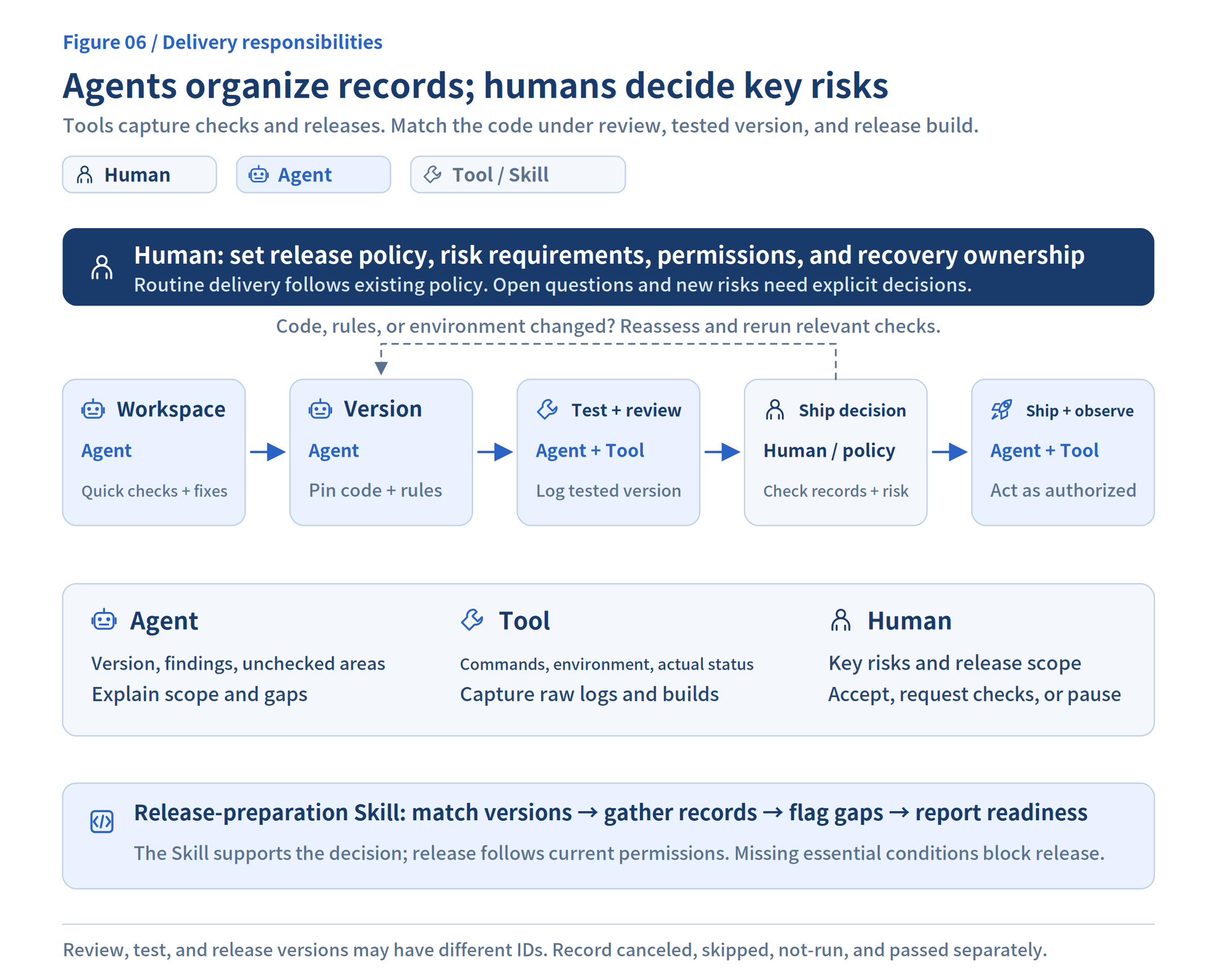
Figure 6. Agents prepare code, organize records, and identify remaining gaps. Tools preserve actual execution results. Humans decide how to handle important risks. A release-preparation Skill helps establish readiness; release execution follows existing authorization.
Some repeated work can be reduced. Cancel obsolete checks when a newer version arrives, reuse downloaded dependencies, and prioritize affected tests when code dependencies are well understood. Broaden the checks when the impact is uncertain. Record canceled, skipped, not-run, and passed checks separately. Operations that change real state, such as publishing a release or migrating data, also need a recovery plan for interruption.
Before delivery, confirm that required checks finished, mandatory findings were resolved, and someone decided the important open questions. If the order fix has not had a long-running test at a realistic workload, say so and decide the next step in light of release scope and monitoring. Complete records help an owner understand what a green status actually establishes.
A delivery summary can briefly state the goal, version, checked and unchecked areas, review results, and remaining risks. Tools should capture version identifiers, commands, and result links automatically where possible; the agent explains how they relate to the task. An owner can then read quickly and return to the original records when results conflict to see what actually ran.
After release, observe what users experience: duplicate orders, increased errors, or slower responses. Release to a small group first and expand after confirming normal behavior. Reverting code, disabling a feature, repairing data, and handling payments or notifications already sent are separate recovery tasks. Preventing duplicate order records does not automatically prevent duplicate charges or notifications. Someone must own those consequences too.
7. Put human judgment where the risks are greatest
As agents produce changes continuously, human attention needs to be allocated more deliberately. Sending every change through the same manual process increases waiting time. Relying entirely on summaries weakens the team’s understanding of critical systems. A useful starting point is to set oversight according to the breadth of impact and difficulty of recovery, then adjust for business importance, permission changes, and uncertainty.
Local, easily reversible changes with established rules can proceed through mature checks within their permitted scope. Changes involving several modules, concurrent requests, data migration, or designs that other modules will copy require closer reading of key code and careful checking of validation and recovery. Even a tiny edit can be dangerous: removing one customer-scope check can mix data belonging to different organizations.
The agent can first explain the impact, completed checks, and recovery approach. A human then decides how much scrutiny is needed. For lower-risk work, agents follow established workflows while humans maintain standards and sample results. When recovery is difficult or the impact is broad, agents perform targeted testing, and humans examine critical code, data handling, and release scope closely.
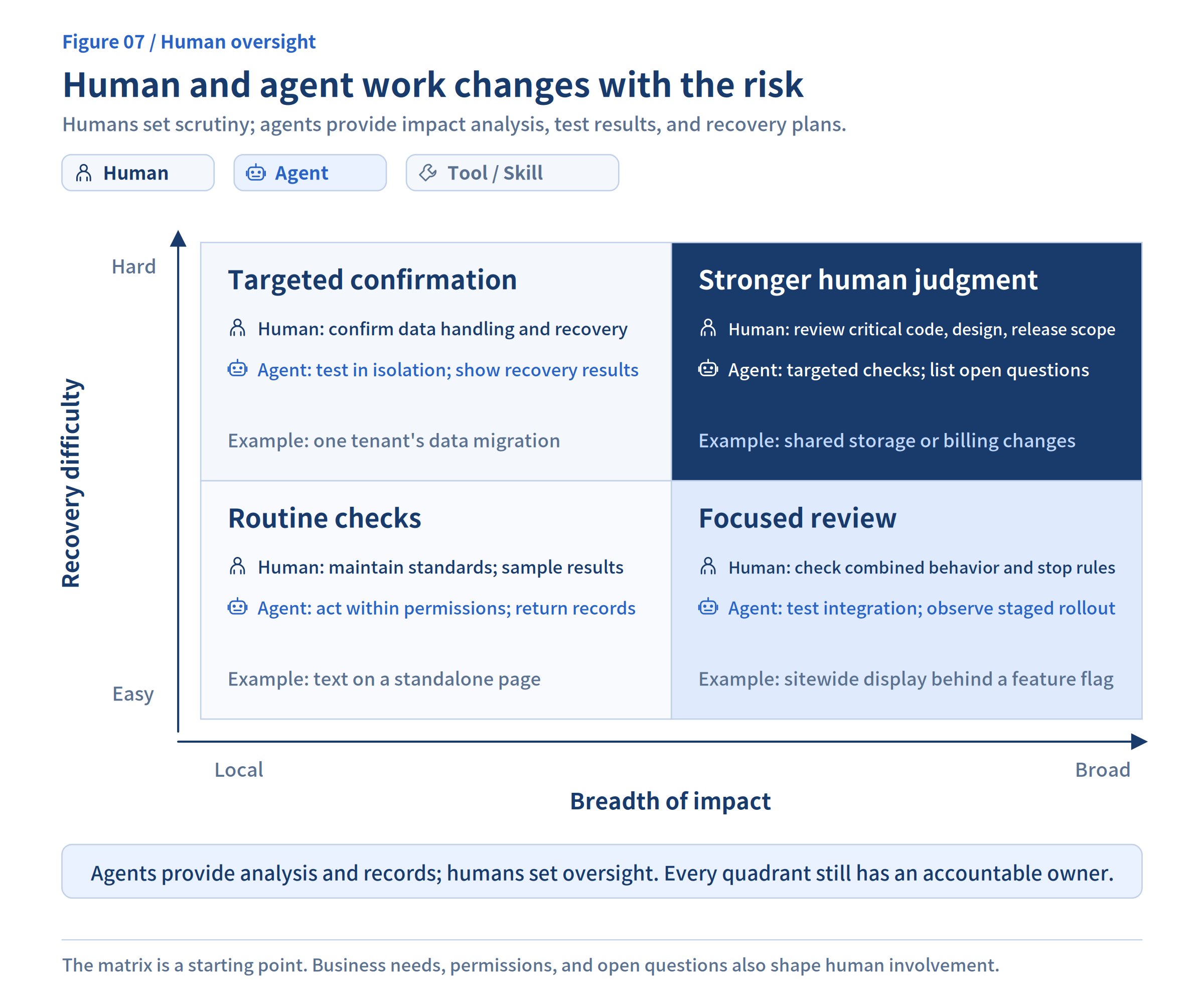
Figure 7. Each quadrant states what humans must decide and what agents must do. Every category needs an owner and necessary checks. Business characteristics, permission changes, and unresolved questions still need separate consideration.
Human work can focus on four areas: deciding whether the work is worth doing, stating key business rules, resolving disagreements that checks alone cannot settle, and remaining accountable after release. These decisions also arise during implementation. If the existing API cannot retrieve an order result, the team must decide whether to change it. If a necessary test environment is missing, someone must decide whether to build it, reduce scope, or delay delivery.
Owners also need to learn to read check records. Were the most important failure cases tested? Do the results apply to the current version? What could still be missing? How would a failure be detected and its impact contained? Read critical code when necessary. Module documentation, design discussions, and rotating maintenance duties can help people stay familiar enough with the system to assess an agent’s explanation.
Delegation can expand as checking and recovery improve. Start with clearly scoped tasks, confirm that results are reliable and important issues reach people promptly, then let agents handle longer workflows. Put human approval where a decision is actually needed. Repeated requests for routine actions consume attention; new risks, additional permissions, and business tradeoffs need explicit ownership.
8. Make each delivery improve the next one
Teams need to turn past mistakes into better future development. A duplicate-order incident can become a test. An unhelpful database error can lead to clearer tool output. A missed review finding can become an example for evaluating review quality. Understand the cause first, then choose an improvement that puts the experience to use.
Requirements that can be stated precisely can become tests. Recurring, recognizable problems can become automated code checks or review rules. Repeated operations can become scripts and Skills. Design background and business agreements belong in the relevant documentation. OpenAI’s maintenance example shows agents finding outdated code, obsolete experiments, and testing problems and proposing changes. [5] Agents can also improve the tools and workflows used to develop software.
For these improvements, agents first propose changes based on execution records. Humans confirm the cause, value, and maintainer; agents then implement and recheck them. Try a new Skill on a small scale first. Does it produce stable results? Does it flag valid changes as errors, create duplicate work, or cause unnecessary human intervention?
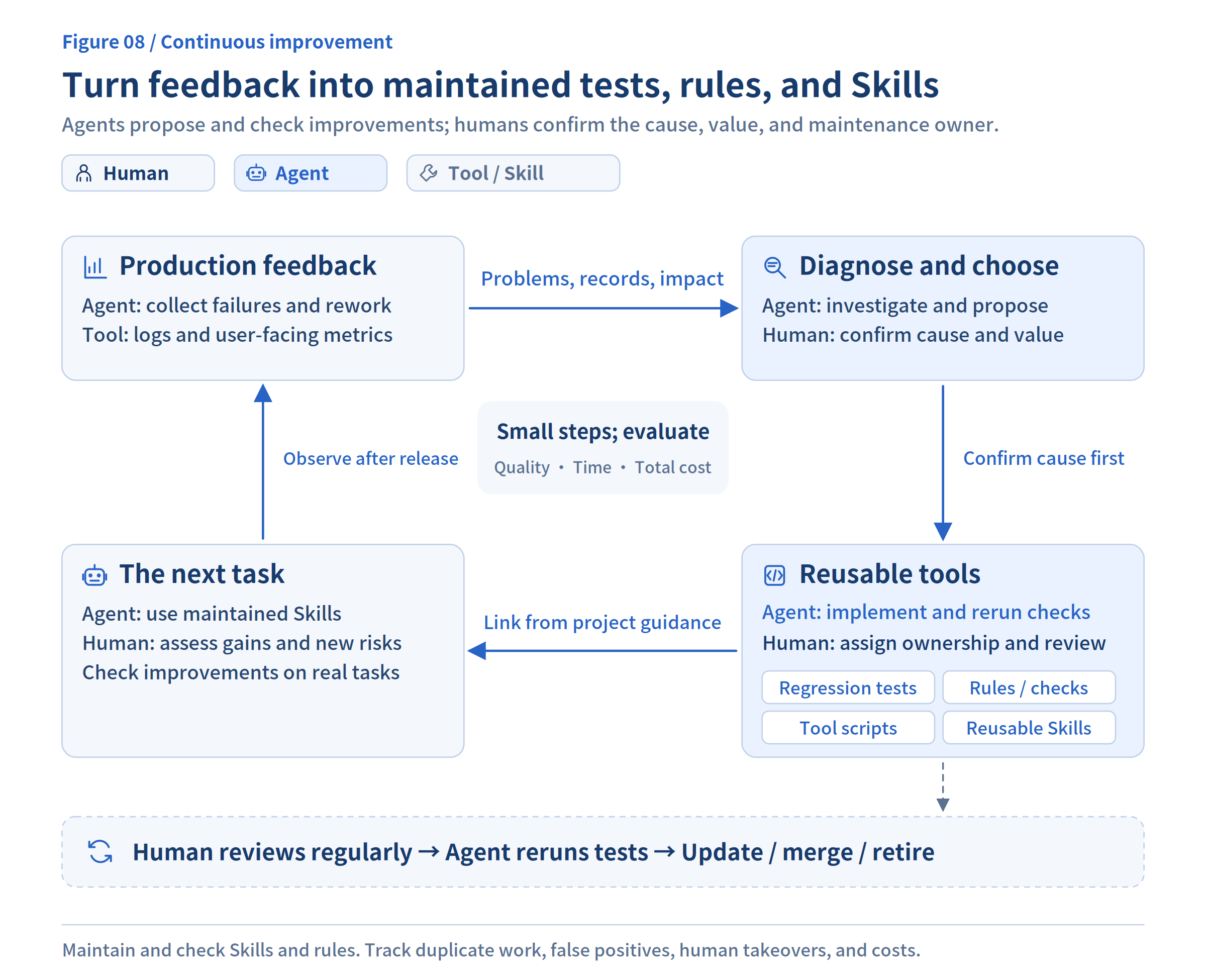
Figure 8. Agents collect problems, propose changes, and check their effects. Humans confirm the cause, value, and owner. Tests, rules, and Skills support future tasks and also need regular review, updates, and retirement.
Every rule needs maintenance. State when it should be used, where it applies, and who owns it. To evaluate review quality, use both examples with known bugs and changes that are already correct. Check whether the reviewer misses errors or incorrectly flags valid code. The latter are false positives. Use some examples to improve the rules and hold others back to evaluate the result. Update, merge, or retire rules that no longer work, duplicate others, or cost too much.
Measure the time from agreed requirements to release, human effort, automated checking and model costs, and production problems together. If time saved by reducing review is later spent handling incidents, total cost may still rise. Lines of code, agent counts, and PR counts describe only part of the picture. Comparisons should state the task types and observation period.
A practical rollout starts with one common, clearly scoped task type. Write the task description, prepare startup and checking commands, and let agents implement, test, and perform one independent review. Then improve handoff records, automated checks, and small-scale release steps. Add rules, tools, or specialist review where problems recur. Record quality, waiting time, and cost at each step so the new approach can be compared with the old one.
AI-native software development needs a stable way of working together: people make goals clear, agents continue in response to results, and tools leave truthful records. The team knows what has been checked, what remains uncertain, and who makes the final decisions. With these practices in place, improvements in model capability can keep translating into reliable, maintainable software.
References
- Louis Claxton. The AI-native SDLC playbook. Anthropic, 2026-08-21.
- Tony Alaniz. Iterating Development Workflows with Codex. OpenAI Cookbook, 2026-08-03.
- Addy Osmani. How the Claude Code team thinks about verification. Anthropic / claude.dev, 2026-11-16.
- Addy Osmani, Morgan Westlee Lunt, Qing Wang. How the Claude Code team does code review. Anthropic / claude.dev, 2026-10-15.
- Rodrigo Roim. Maintaining software with the GPT-6 family. OpenAI Developers, 2026-10-14.