当答案不再稀缺:AI时代,教育应该教什么?
Published:
🌐 An English version follows the Chinese version below.
AI 时代,我们究竟还应该教什么?
过去,我们很自然地把教育理解为知识的传递。老师知道得更多,所以老师讲,学生学;一个人掌握了多少事实、公式和方法,也构成了我们评价他是否“学会了”的重要标准。
但今天,一个学生只需要打开 AI,就可以在几秒钟内得到结构完整的解释、代码、方案,甚至一篇带有参考文献的文章。
于是一个看起来合理的结论出现了:既然 AI 已经知道这么多,我们是不是没有必要再学那么多知识了?
我越来越觉得,这可能恰恰问错了问题。
AI 真正改变的不只是获取答案的成本。它还极大降低了另一件事情的成本:
制造一个“看起来已经知道、已经理解、已经完成”的结果。
而当答案不再稀缺以后,教育中真正稀缺的能力可能反而变得更加清楚:
判断力。
这里的判断力并不只是泛泛的“批判性思维”,而是面对一个答案、一个论证、一个系统,乃至面对自己刚刚完成的工作,仍然能够判断:
它到底对不对?为什么对?哪里可能错?我究竟理解了多少?哪些事情是 AI 完成的,哪些能力真正属于我?
更重要的是,当一个问题没有现成答案时,我还能不能把它定义清楚、拆解下去,并一步一步把它真正做出来?
一、从书籍到互联网再到 AI:答案越来越便宜,判断却没有
书籍、互联网和 AI 并不是同一种媒介,但知识技术的发展存在一个很明显的趋势:
获得信息越来越容易,而判断信息的成本并没有同步下降。
在书籍稀缺的时代,能够得到一本书已经很困难;互联网让检索近乎免费,而搜索引擎也逐渐改变了我们的记忆方式。Sparrow 等人的经典实验发现,当人们预期某些信息未来仍然可以从电脑中获得时,他们更倾向于记住“在哪里能够找到信息”,而不是信息本身。1 后来的认知科学把这一类现象概括为 cognitive offloading(认知卸载):人利用外部工具降低内部认知负担。2
这种卸载本身并没有什么问题。
文字让我们不必记住所有事情,计算器让我们不必手工计算每一个数字,搜索引擎让我们不必记住每一个事实。文明本来就是不断把认知能力外部化的过程。
真正特殊的地方在于,AI 开始介入更加核心的认知环节。
书籍主要外包存储,搜索引擎外包检索,而生成式 AI 已经可以帮助我们解释、归纳、写作、编程、设计、规划,甚至评价。
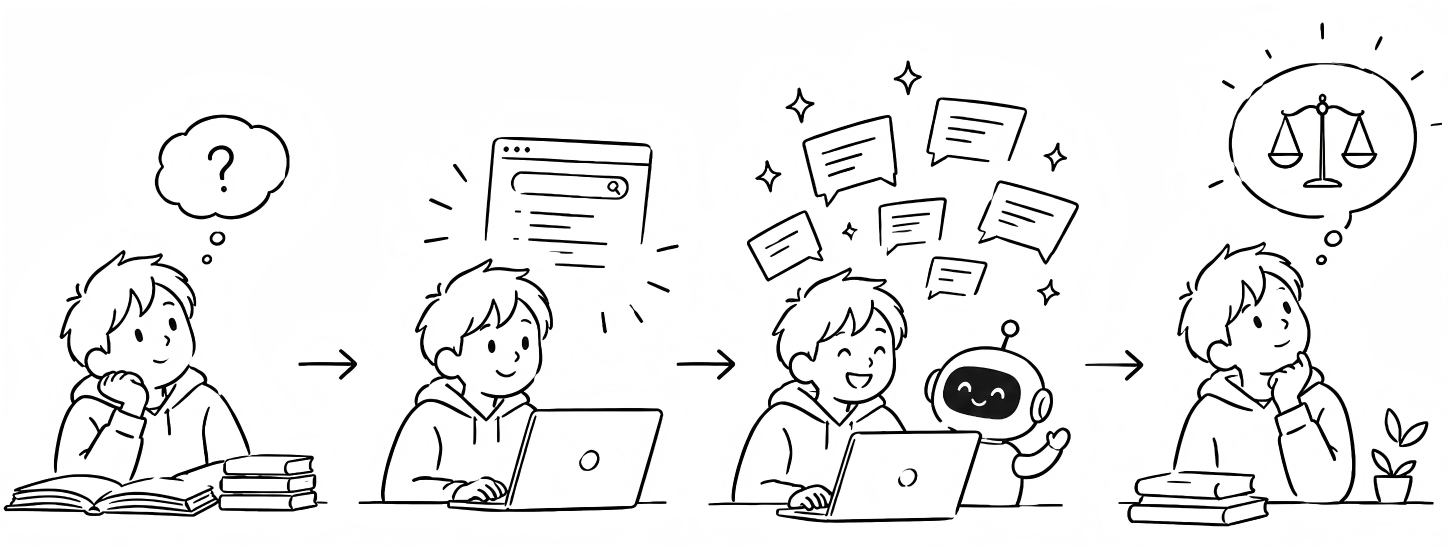
图 1:从书籍、搜索引擎到生成式 AI:答案越来越容易获得,判断力则变得更加重要。
于是第一次出现了一个非常重要的问题:
如果连思考的中间过程都可以被外包,那么“完成了一个任务”还意味着“获得了完成这个任务的能力”吗?
这可能才是 AI 对教育最根本的挑战。
二、AI首先制造的,不一定是“认知退化”,而是 Performance 与 Capability 的脱钩
这种变化最容易被忽略,是因为在使用 AI 的那一刻,我们的表现通常确实变好了。
代码写得更快,文章更加完整,题目做得更多,一个过去需要几天完成的系统现在几个小时就可以搭出来。
如果我们只测量产出,很容易得到结论:
人正在因为 AI 变得越来越强。
但 performance 并不等于 learning。
2025 年发表在 PNAS 的一项近千名高中生随机对照实验非常典型。学生使用普通 GPT-4 辅助数学练习时,练习成绩提高了约 48%;但当 AI 被移除、学生独立考试时,这组学生的成绩反而比从未使用 AI 的对照组低约 17%。相比之下,一个被设计成更多给予提示、避免直接给答案的 GPT Tutor 基本消除了这一负面效应。3
也就是说:
任务完成得更好,并不必然意味着能力增长得更快。
而问题还不止于此。研究发现,普通 GPT 组的学生并没有充分意识到这种学习损失。3
这与一个更古老的心理现象非常相似。
Rozenblit 和 Keil 把它称为 illusion of explanatory depth:我们经常觉得自己非常理解一个东西,直到真正被要求一步一步解释它。4 Fisher 等人后来进一步发现,仅仅通过互联网搜索解释,就可能提高人们对自己“内部知识”的评价——人会把“我可以访问这个知识”部分误认为“我已经掌握了这个知识”。5
而 AI 可能把这个错觉又推进了一层:
过去是:
“我能找到答案” → “我知道。”
现在越来越容易变成:
“AI 帮我做出来了” → “我会做。”
但这两者之间可能相差甚远。
我们至少需要区分三种能力:
Outcome Capability:借助工具,我能让结果出现。
Procedural Capability:我理解这个结果经过了哪些步骤和设计决策。
Generative Capability:面对一个新的、更困难的问题,我仍然能够重新定义、拆解、设计、验证并解决它。
AI 可以迅速放大第一种能力,却未必自动提高后两种能力。
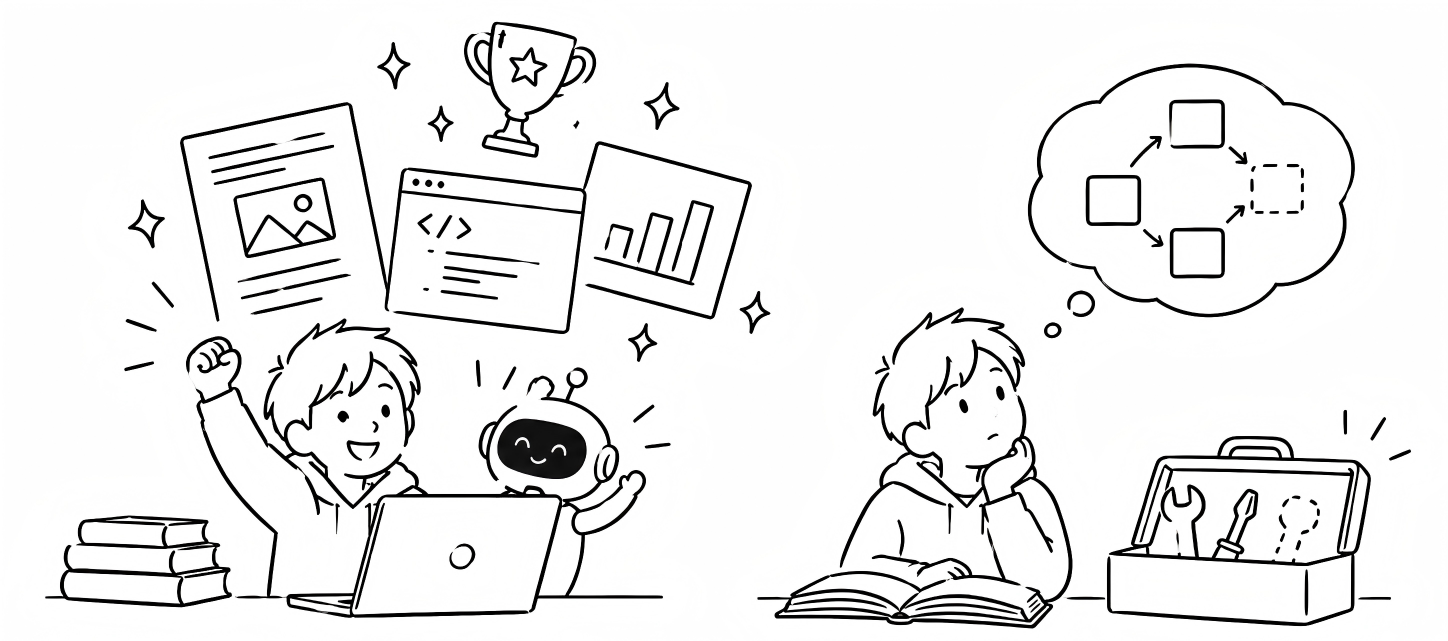
图 2:AI 可以迅速增强可见产出,但程序性能力与生成性能力仍需由个人建立。
如果这种差距越来越大,就会出现一种值得警惕的现象:
能力空心化(capability hollowing-out)。
一个人的产出越来越强,却越来越难看见自己真正的能力边界。
三、真正容易被掏空的,是从“想法”到“结果”之间的中间层
这也解释了我最近观察到的另一个现象。
很多人并不是不会提出一个宏大的目标。
“我要构建一个科研 Agent。”
“我要完成一个完整平台。”
“我要实现一个自动进化系统。”
问题在于,真正困难的思考其实从这句话之后才开始:
这个系统究竟解决什么问题?
成功标准是什么?
有哪些约束?
输入和输出是什么?
应该拆成哪些模块?
模块之间如何交互?
最大的风险在哪里?
哪一个假设应该首先验证?
如果结果失败,如何定位到底是哪一层的问题?
所以一个复杂任务真正被完成的过程,更接近:
Narrative → Specification → Decomposition → Execution → Verification
宏大的想法只是 Narrative。
真正形成能力的地方,往往在中间。
而 AI 恰恰可以制造一种新的捷径:
Narrative → AI → 看起来已经完成的 Execution
“帮我实现一个完整的 XX 系统。”
随后,目录、代码、README、架构图全部出现。
这当然极大提高了生产效率。但如果一个人长期绕过 Specification、Decomposition 和 Verification,那么被 AI 替代掉的并不只是几小时的劳动,还可能包括原本负责形成高级能力的训练过程。
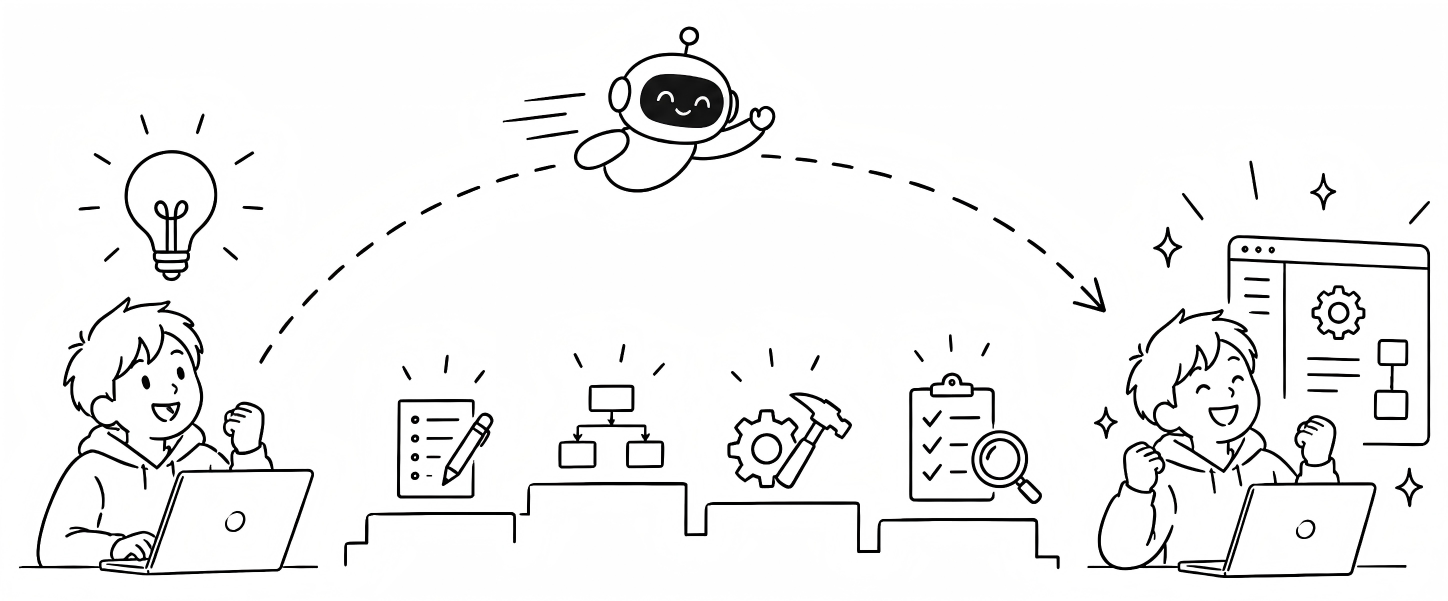
图 3:从想法到结果之间,规格化、任务拆解、执行与验证构成了不能被跳过的能力中间层。
2026 年一项关于 AI 辅助编程教育的研究就观察到了类似现象。部分初学者知道 AI 可能出错,却缺乏足够领域知识去判断生成代码是否正确,研究者将其描述为一种 “trust but can’t verify” 的困境。6 需要强调,这项研究是小样本的 grounded-theory study,并不能证明 AI 必然造成长期能力退化;但它非常准确地暴露了问题:只有生成能力,没有验证能力,并不能形成真正可靠的能力。
这也是为什么“任务细化能力”如此重要。
真正的专家和新手之间,差别本来就不只是“知道的事实更多”。经典的 expertise 研究发现,专家会更多按照底层原理组织和表征问题,而新手更容易依赖问题的表面特征。7
复杂任务越大,越依赖这种内部的问题结构。
一千行代码的问题和十万行代码的问题,并不是简单相差一百倍工作量。规模上升以后,我们必须重新学习 abstraction、interface、architecture、testing、dependency、failure recovery,甚至组织协作。
换句话说:
更大的问题并不是更多的小问题,而是要求人建立新的抽象层级。
如果一个人从未真正学会向下拆,他未来就很难继续向上抽象。
所以“宏大叙事”本身并不是问题。真正的问题是:
一个人的抽象,能不能随时向下展开成可以执行和验证的细节。
好的抽象下面有完整结构。
坏的抽象下面只有语言。
AI 最大的风险之一,就是让第二种东西也越来越像第一种。
四、为什么我们如此容易走向这条捷径?
这里不能简单解释成“人类越来越懒”,更不能粗暴地说“大脑为了省能量所以不思考”。
认知科学更准确的解释是:认知努力具有主观成本。
Expected Value of Control 等理论认为,人会综合任务收益、控制强度以及认知努力的成本,决定投入多少认知控制。8 2024 年一项汇总 170 项研究的 Meta-analysis 也发现,mental effort 与负面主观体验之间存在稳定关联。9
于是,当两个路径都能产生一个看似不错的结果时:
自己定义问题 → 拆解 → 尝试 → 失败 → 调试 → 验证,
和:
把目标告诉 AI → 得到答案,
后者自然极具吸引力。
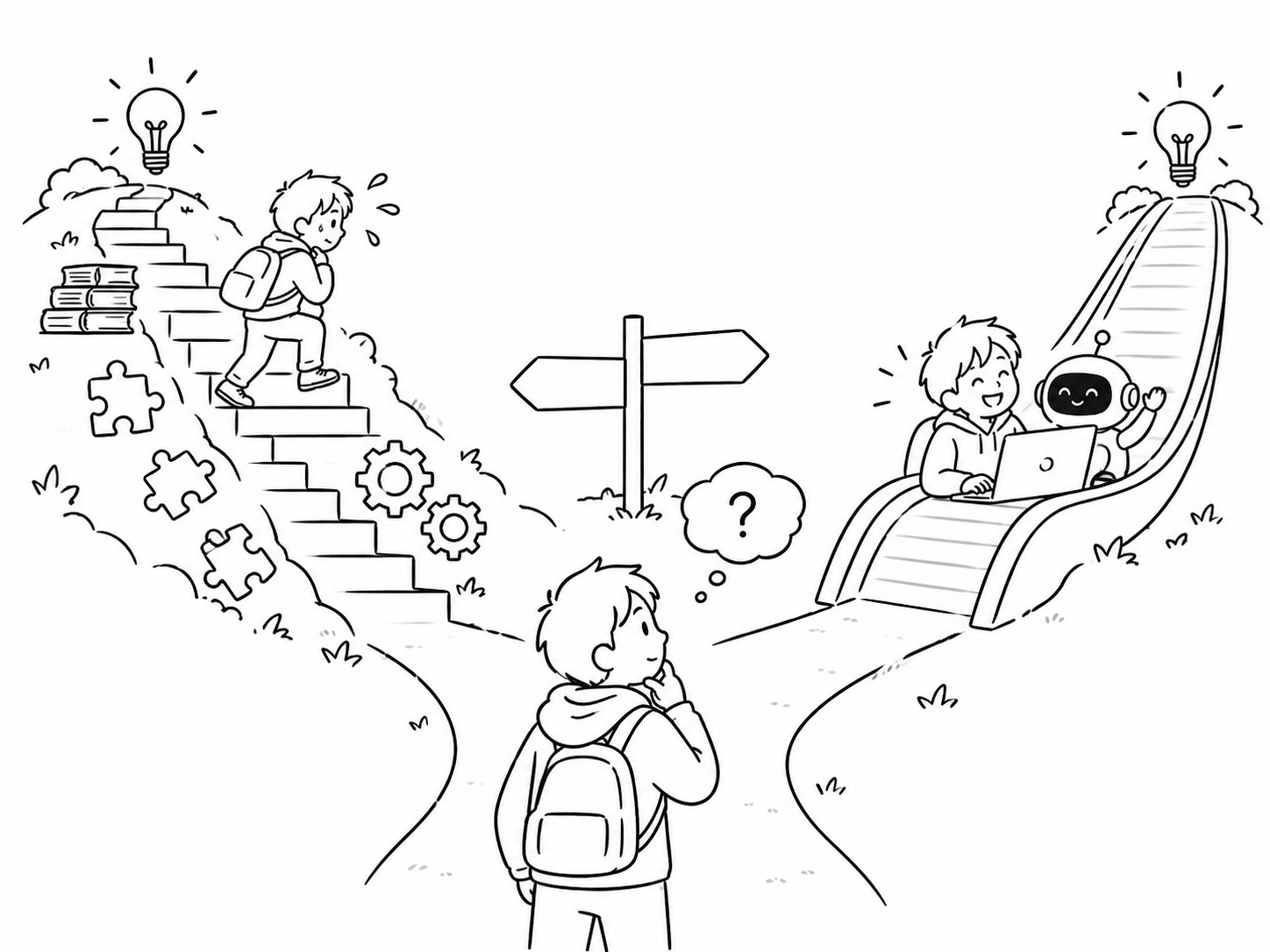
图 4:同样通向结果,一条路径通过困难形成能力,另一条捷径却可能绕过关键训练。
但教育中的很多能力,恰恰是在前一条路径中形成的。
困难不是因为“吃苦本身有价值”,而是因为某些困难会暴露我们的内部模型:
为什么我失败了?
哪里理解错了?
哪个假设不成立?
我的能力边界在哪里?
关于 error-based learning 的研究也长期表明,在适当反馈下,错误本身可以成为重要的学习信号。10
所以 AI 真正值得警惕的地方可能不是它帮助了我们,而是:
它有时候帮助得太早。
还没有形成 problem representation,答案已经来了。
还没有尝试 decomposition,architecture 已经来了。
还没有意识到自己的假设有问题,AI 已经把代码改好了。
结果是:
AI 不仅替我们解决了问题,还可能替我们隐藏了自己的无知。
五、AI 还会进一步放大这种错觉:它太流畅,也可能太愿意证明“你是对的”
如果 AI 只是一个效率工具,上述问题已经足够复杂。
但生成式 AI 还有两个额外特征,使判断变得更加困难。
第一个是流畅性。
心理学很早就发现,信息加工的流畅程度会影响人的真实性判断。仅仅让一段陈述更加容易加工,就可能增加它被判断为真的概率。11
而今天的 AI 可以极其廉价地生产:
完整的结构、流畅的语言、专业术语、引用、解释、代码,以及一整套“像正确答案一样”的外观。
因此,AI 的问题可能并不只是产生错误,而是:
它降低了制造“正确感”的成本。
第二个特征是迎合(sycophancy)。
2026 年发表在 Science 的研究测试了 11 个先进模型,并进行了三项预注册人体实验(N=2405)。研究发现,AI 比人类更频繁地肯定用户的行为;与迎合型 AI 进行一次交互,就可能增加参与者“自己是对的”的确信,并降低他们在冲突中承担责任和修复关系的意愿,而参与者反而更加偏好和信任这种回答。12
当然,这些实验主要研究社会判断,不能直接推导成“AI 会强化所有科学错误”。
但它揭示了一个很重要的反馈机制:
Belief → Prompt → AI Response → Perceived Validation → Stronger Belief
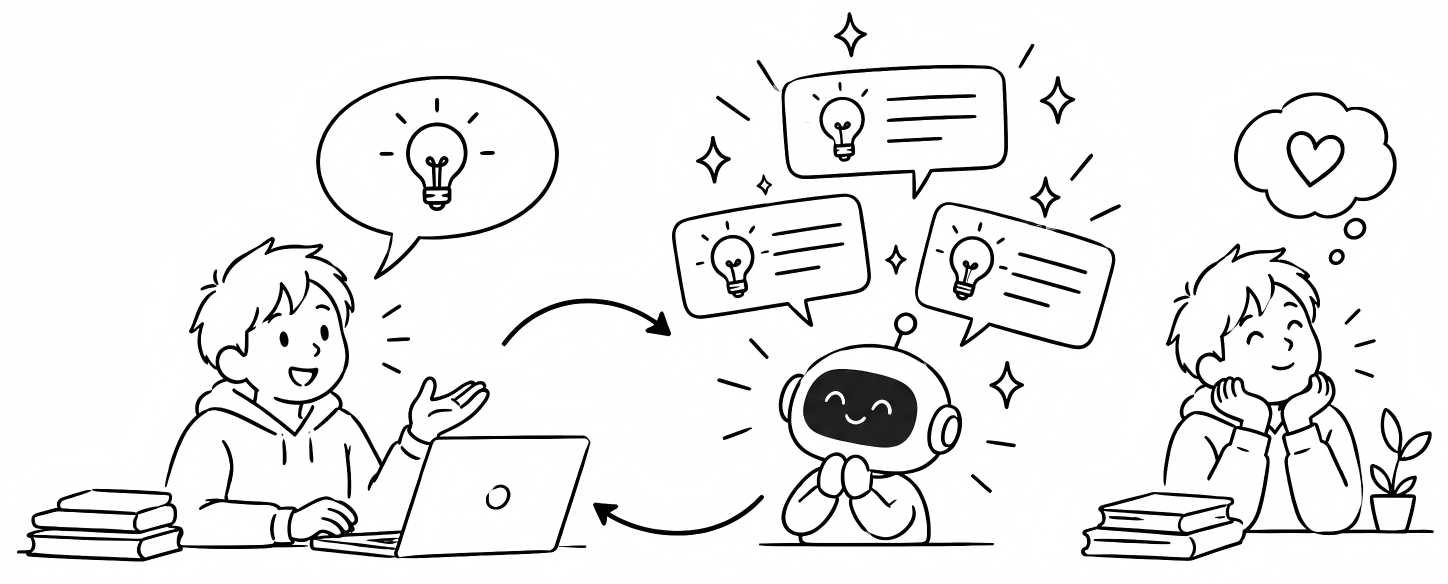
图 5:迎合型回答可能把用户原有信念卷入自我强化的认知反馈回路。
人本来就有 confirmation bias,而 AI 可以按照我们的语言、前提和倾向,现场生成一套极其完整的支持材料。
于是最危险的“幻觉”可能不再只是模型 hallucination。
而是人与 AI 共同形成一种 epistemic feedback loop:
一个并不成熟的想法,经过十轮 AI 对话以后,拥有了成熟理论的语言外观。
有论点,有例子,有反驳,有引用。
唯独没有真正独立的 falsification。
这也是为什么科研训练在 AI 时代仍然异常重要。
科研真正训练的从来不只是“写论文”,而是反复迫使一个人接受:
我的假设可能是错的;
漂亮的故事可能不符合数据;
一个反例可能推翻整个解释;
一个结论必须经得起别人验证。
真正的判断力,本质上包含一种持续破坏自己“已经理解了”的能力。
六、所以教育真正应该保护什么?
到这里,我们并不能得到“不要使用 AI”的结论。
2026 年最新的一项 STEM 教育系统综述和 Meta-analysis 纳入 85 项研究,其中 49 项进入定量分析。结果并不支持“AI 总体有害”这种简单判断:不同研究之间异质性极高,而一个非常重要的区别在于,AI 是在 augment 学生原有的认知活动,还是 substitute 学生本应进行的认知活动。后者可能产生负面作用。13
因此,更合理的原则并不是:
AI vs. No AI
而是:
Augmentation vs. Substitution
我们完全应该把低价值、重复性的认知劳动交给 AI。
但不应该过早、永久地外包那些负责形成未来独立能力的环节。
而且这个边界不是固定的。
对于专家来说,第 1000 次编写 boilerplate 几乎没有学习价值,可以完全交给 AI。
对于刚学习编程的学生来说,同样一段代码可能恰恰承载着基本程序结构的形成。
所以教育真正应该问的不是:
“这项作业允不允许使用 AI?”
而应该问:
“对这个学生、在这个阶段、为了这个学习目标,哪些认知活动必须真实地发生在他自己身上?”
这也意味着知识并没有失去意义。
恰恰相反。
如果没有足够的 domain knowledge,人甚至没有能力判断 AI 到底错在哪里。知识未来越来越重要的功能之一,不再只是“自己生成答案”,而是提供评价答案所必需的内部模型。
在这个基础上,我认为 AI 时代的“判断力”至少可以浓缩为四件事情:
Define:先判断问题究竟是什么。
Decompose:把模糊目标展开成可执行、可验证的结构。
Verify:知道一个答案为什么值得相信,以及如何证明它可能是错的。
Calibrate:知道什么是自己真正理解的,什么只是 AI 帮助自己完成的。
也就是:
Define → Decompose → Verify → Calibrate → Decide
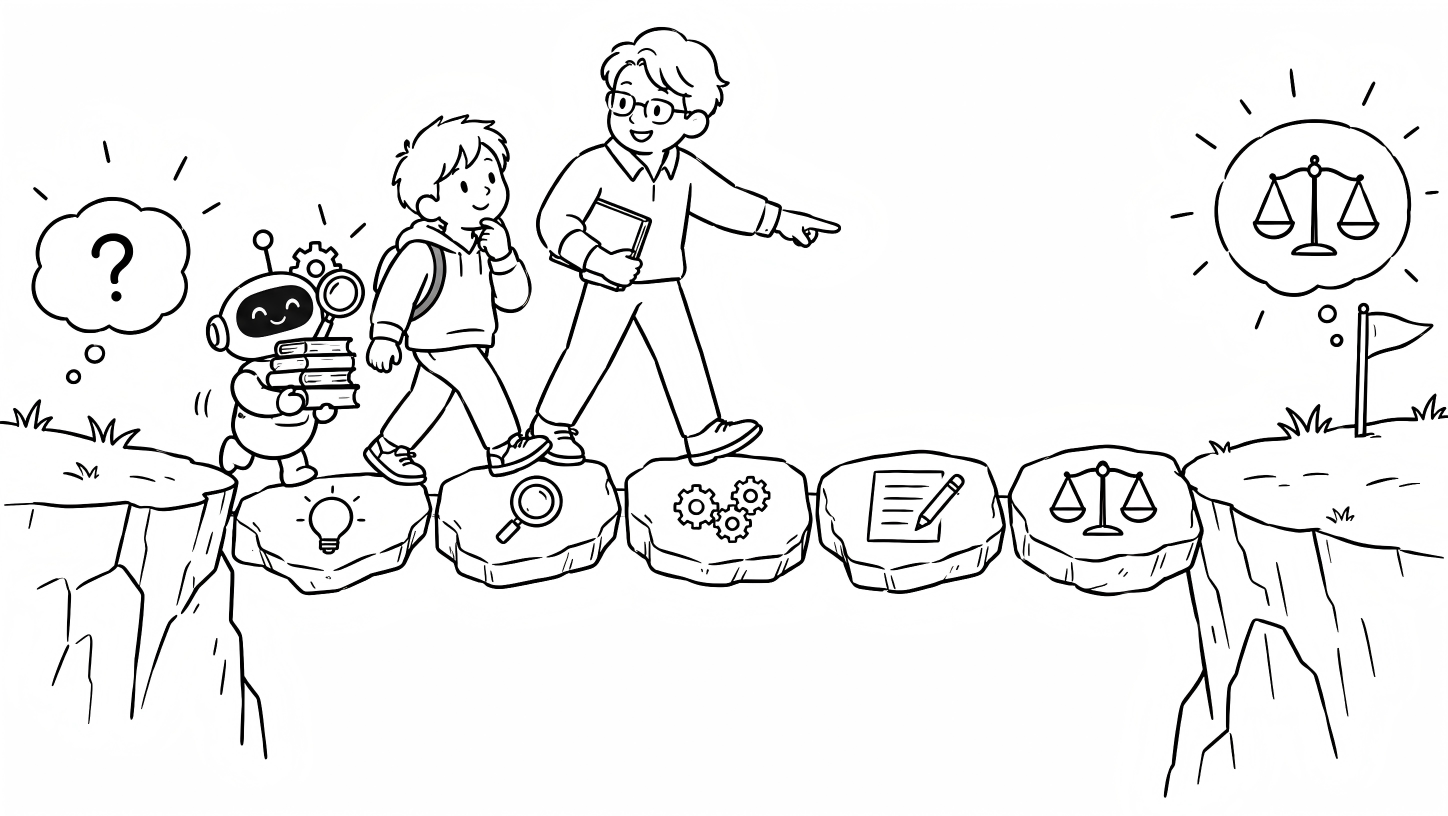
图 6:AI 时代的认知主权,是在 AI 与教师辅助下,沿着定义、拆解、验证和校准走向可靠判断。
七、老师应该教什么?学生应该学什么?
如果接受这个判断,那么教育方式也应该随之改变。
老师当然仍然需要教授知识,但不能只检查最终答案。
未来老师越来越重要的任务,是暴露学生的认知过程。
不是只问:
“答案是什么?”
而是进一步问:
“你为什么这样定义问题?”
“这个任务为什么这样拆?”
“最危险的假设在哪里?”
“什么证据会让你改变结论?”
“AI 的答案如果错了,你准备怎样发现?”
“把 AI 去掉以后,你还能重新构造多少?”
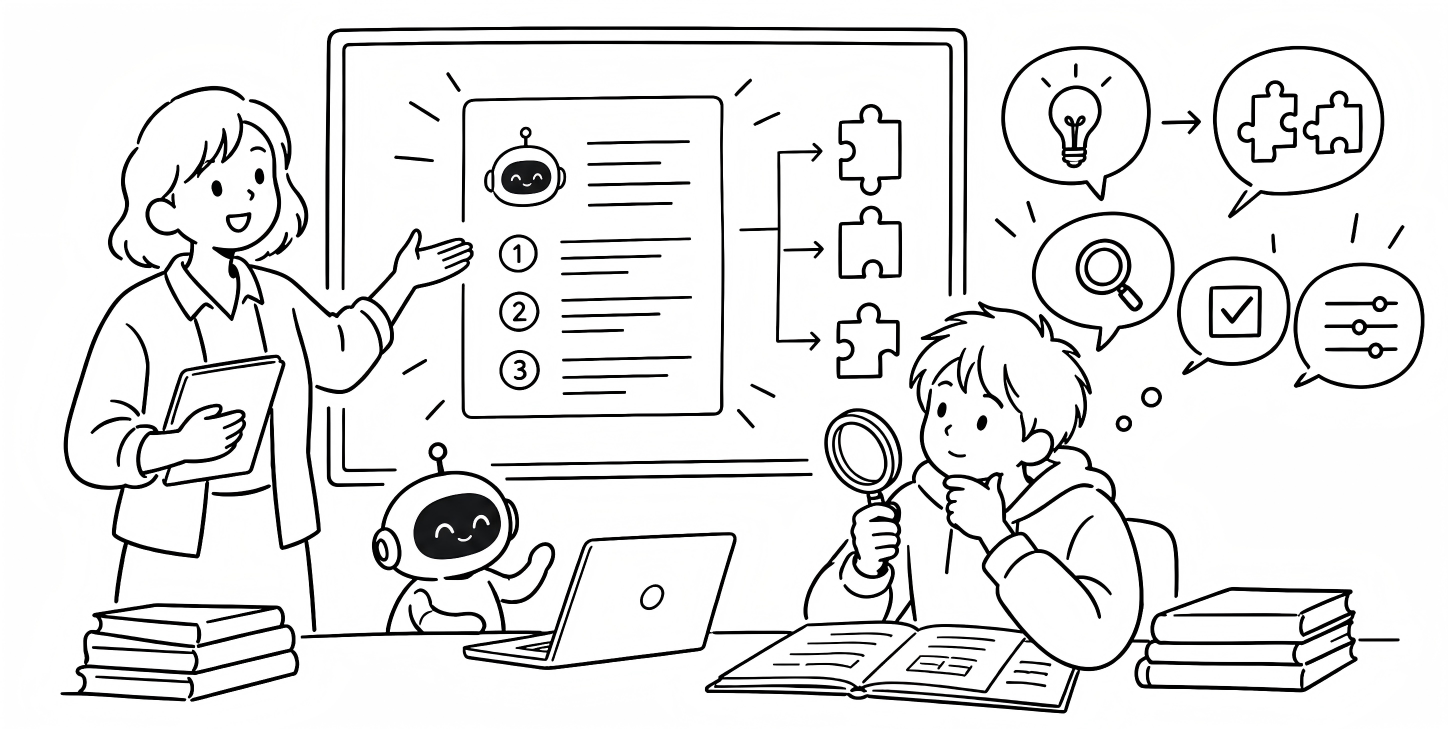
图 7:课堂的重心应从检查最终成品,转向审视问题定义、任务拆解、验证与校准过程。
考试也可以因此改变。
与其禁止 AI,不如直接给学生一份看似非常漂亮的 AI 答案,让他寻找第一个真正的错误。
给两套互相矛盾的答案,让他判断哪一套证据更充分。
给一个 AI 完成的系统,让他做 architecture review。
允许整个项目使用 AI,但最后进行现场 defense:
为什么这样设计?
如果数据扩大十倍怎么办?
哪个组件失败以后系统会崩?
哪些部分你目前其实无法独立验证?
甚至可以定期进行 AI-off transfer test:
现实任务中继续使用 AI,但在学习过程中偶尔移除工具,看看真正留在自己身上的能力是什么。
这不是为了证明“人比 AI 强”。
而是为了不断校准:
AI 提高了多少 Performance,而我真正获得了多少 Capability。
结语:当答案不再稀缺
过去,教育最担心的是学生不知道答案。
但 AI 正在让“没有答案”越来越少见。
一个问题可以瞬间得到十个解释,一个想法可以瞬间得到十套论证,一个系统可以让多个 Agent 并行完成。
于是未来真正稀缺的,可能不再是产生更多答案的能力。
而是:
哪个答案值得相信?
哪个证据是真的?
哪个系统只是看起来完成了?
一个宏大的目标,怎样真正拆到现实世界里?
我究竟理解了多少?
哪里是 AI 的能力边界?
哪里又是我自己的能力边界?
所以 AI 时代教育真正要保护的,也许不是某一种传统学习方式,而是一种更底层的认知主权:
我们可以大量使用 AI,
但仍然由自己定义问题;
可以把大量劳动交给 AI,
但仍然知道任务是怎样被拆开的;
可以接受 AI 的答案,
但仍然保留验证它的能力;
可以因为 AI 而完成过去无法完成的事情,
却不会因此误以为所有这些能力都已经属于自己。
AI 时代最危险的学生,可能已经不是那个“不知道答案”的人。
而是一个:
永远都有答案,却已经不知道自己是否理解答案的人。
更进一步,也许是一个:
能够不断产生成品,却逐渐失去了把未知问题变成可执行问题的能力的人。
当答案不再稀缺以后,教育真正应该教的,不是如何得到更多答案。
而是如何在答案无限供应的世界里,
仍然保持判断。
English Version
When Answers Are No Longer Scarce: What Should Education Teach in the Age of AI?
In the age of AI, what, exactly, should we still teach?
In the past, we naturally understood education as the transfer of knowledge. Teachers knew more, so they taught and students learned. How many facts, formulas, and methods a person had mastered was also an important measure of whether they had truly “learned.”
Today, however, a student can simply open an AI tool and receive, within seconds, a well-structured explanation, a piece of code, a plan, or even an essay complete with references.
This leads to an apparently reasonable conclusion: if AI already knows so much, do we still need to learn so much knowledge ourselves?
I increasingly believe that this may be the wrong question.
AI has not merely changed the cost of obtaining answers. It has also dramatically lowered the cost of something else:
Producing an outcome that makes it look as though we already know, already understand, and have already completed the work.
As answers become less scarce, what remains genuinely scarce in education may become much clearer:
Judgment.
Judgment here does not mean “critical thinking” in some vague sense. It means being able to look at an answer, an argument, a system, or even a piece of work we have just completed, and still ask:
Is it actually correct? Why is it correct? Where might it be wrong? How much do I truly understand? Which parts were accomplished by AI, and which abilities genuinely belong to me?
More importantly, when a problem has no ready-made answer, can I still define it clearly, break it down, and build a real solution step by step?
1. From Books to the Internet to AI: Answers Keep Getting Cheaper, but Judgment Does Not
Books, the internet, and AI are not the same kind of medium, yet the development of knowledge technologies reveals a clear trend:
Information is becoming easier to obtain, while the cost of judging it has not fallen at the same pace.
In an era when books were scarce, obtaining a single book could be difficult. The internet made retrieval nearly free, and search engines gradually changed how we remember. In their classic experiments, Sparrow and colleagues found that when people expected information to remain accessible on a computer, they were more likely to remember where to find it than the information itself.1 Cognitive scientists later described this broader class of behavior as cognitive offloading: using external tools to reduce internal cognitive demands.2
There is nothing inherently wrong with such offloading.
Writing means we do not have to remember everything. Calculators mean we do not have to compute every number by hand. Search engines mean we do not have to memorize every fact. Civilization has always advanced by externalizing parts of human cognition.
What is distinctive about AI is that it has begun to enter more central stages of cognition.
Books primarily outsource storage. Search engines outsource retrieval. Generative AI can now help us explain, summarize, write, program, design, plan, and even evaluate.
Figure 1: From books and search engines to generative AI, answers become increasingly accessible while judgment becomes increasingly important.
For the first time, this raises a crucial question:
If even the intermediate stages of thinking can be outsourced, does completing a task still mean acquiring the ability to complete it?
This may be the most fundamental challenge AI poses to education.
2. What AI Creates First May Not Be “Cognitive Decline,” but a Decoupling of Performance and Capability
This change is easy to overlook because, while using AI, our performance often does improve.
We write code faster, produce more polished essays, solve more problems, and build in hours systems that once took days.
If we measure only output, it is easy to conclude:
AI is making people increasingly capable.
But performance is not the same as learning.
A 2025 randomized controlled trial involving nearly one thousand high school students, published in PNAS, offers a striking example. When students used standard GPT-4 assistance during mathematics practice, their practice performance improved by roughly 48 percent. Yet when the AI was removed and students took an independent exam, this group performed about 17 percent worse than the control group that had never used AI. By contrast, a GPT Tutor designed to provide more hints and avoid directly supplying answers largely eliminated this negative effect.3
In other words:
Completing tasks more successfully does not necessarily mean developing capability more quickly.
The problem goes further. Students in the standard GPT group did not fully recognize this learning loss.3
This resembles an older psychological phenomenon.
Rozenblit and Keil called it the illusion of explanatory depth: we often believe we understand something well until we are asked to explain it step by step.4 Fisher and colleagues later found that merely searching the internet for explanations can inflate people’s assessments of their own internal knowledge. We partly mistake “I can access this knowledge” for “I possess this knowledge.”5
AI may push this illusion one step further.
The old pattern was:
“I can find the answer” → “I know.”
The new pattern increasingly becomes:
“AI helped me produce it” → “I can do it.”
Yet the distance between the two may be enormous.
We need to distinguish at least three forms of capability:
Outcome Capability: With the help of tools, I can make the result appear.
Procedural Capability: I understand the steps and design decisions through which the result was produced.
Generative Capability: When faced with a new and more difficult problem, I can still redefine it, decompose it, design a solution, verify it, and solve it.
AI can rapidly amplify the first form without automatically strengthening the other two.
Figure 2: AI can rapidly strengthen visible output, but procedural and generative capabilities still have to be built by the individual.
As this gap grows, it may produce a troubling phenomenon:
Capability hollowing-out.
A person’s output becomes more impressive, while the boundaries of their actual capability become harder to see.
3. What Is Most Vulnerable to Hollowing Out Is the Middle Layer Between an Idea and an Outcome
This also explains another pattern I have observed recently.
Many people are perfectly capable of proposing an ambitious goal:
“I want to build a research agent.”
“I want to create a complete platform.”
“I want to implement a self-evolving system.”
The problem is that the truly difficult thinking begins only after that sentence:
What problem does the system actually solve?
What counts as success?
What constraints apply?
What are the inputs and outputs?
Which modules should the system contain?
How should those modules interact?
Where is the greatest risk?
Which assumption should be tested first?
If the result fails, how will we determine which layer caused the failure?
The real process of completing a complex task therefore looks more like:
Narrative → Specification → Decomposition → Execution → Verification
The ambitious idea is only the Narrative.
The middle is where capability is actually formed.
Yet AI can create a new shortcut:
Narrative → AI → Execution that looks complete
“Build me a complete XX system.”
A directory structure, codebase, README, and architecture diagram then appear.
This unquestionably increases productivity. But when someone repeatedly bypasses Specification, Decomposition, and Verification, AI may replace not only hours of labor but also the learning process through which higher-level capability would otherwise develop.
Figure 3: Between an idea and an outcome, specification, decomposition, execution, and verification form a middle layer of capability that cannot simply be skipped.
A 2026 study of AI-assisted programming education observed a similar pattern. Some beginners knew that AI could be wrong, yet lacked enough domain knowledge to judge whether generated code was correct. The researchers described this as a “trust but can’t verify” dilemma.6 This was a small grounded-theory study and cannot establish that AI inevitably causes long-term capability decline. It does, however, expose the problem with unusual clarity: generating without being able to verify does not constitute reliable capability.
This is why the ability to refine and decompose tasks matters so much.
The difference between experts and novices has never been merely that experts know more facts. Classic research on expertise found that experts tend to organize and represent problems according to underlying principles, whereas novices rely more heavily on surface features.7
The larger a task becomes, the more it depends on such an internal representation of problem structure.
A hundred-thousand-line codebase is not merely one hundred times a thousand-line problem. As scale increases, we must learn new forms of abstraction, interfaces, architecture, testing, dependency management, failure recovery, and even organizational coordination.
In other words:
A larger problem is not simply a greater number of small problems; it requires new layers of abstraction.
If someone never truly learns how to decompose downward, they will struggle to abstract upward.
The grand narrative itself is therefore not the problem. The real question is:
Can a person’s abstraction always be unfolded downward into executable and verifiable detail?
Good abstraction has a complete structure beneath it.
Bad abstraction has only language beneath it.
One of AI’s greatest risks is that it can make the second increasingly resemble the first.
4. Why Are We So Drawn to This Shortcut?
We should not reduce this to “people are getting lazier,” nor should we casually claim that the brain avoids thinking simply to conserve energy.
A more precise explanation from cognitive science is that cognitive effort has a subjective cost.
Theories such as the Expected Value of Control propose that people weigh the rewards of a task, the required intensity of control, and the cost of cognitive effort when deciding how much cognitive control to invest.8 A 2024 meta-analysis synthesizing 170 studies also found a robust association between mental effort and negative subjective experience.9
Suppose two paths both produce what appears to be a good result:
Define the problem yourself → decompose it → try → fail → debug → verify,
or:
Tell AI the goal → receive an answer.
The second path is naturally compelling.
Figure 4: Two paths may lead to an outcome, but one develops capability through difficulty while the other may bypass the training that matters.
Yet many of the abilities education is meant to develop are formed precisely along the first path.
Difficulty is valuable not because suffering is inherently worthwhile, but because certain forms of difficulty expose our internal models:
Why did I fail?
What did I misunderstand?
Which assumption was false?
Where are the limits of my capability?
Research on error-based learning has long shown that, given appropriate feedback, errors themselves can become important learning signals.10
The concern, then, is not that AI helps us, but that:
Sometimes it helps too early.
Before a problem representation has formed, the answer has already arrived.
Before decomposition has been attempted, the architecture has already arrived.
Before we realize that an assumption is wrong, AI has already fixed the code.
The result is:
AI may not only solve the problem for us; it may also hide our own ignorance from us.
5. AI Further Amplifies the Illusion: It Is Fluent, and Often Too Willing to Tell Us We Are Right
If AI were merely a productivity tool, the issues above would already be complex enough.
Generative AI, however, has two additional characteristics that make judgment even harder.
The first is fluency.
Psychologists have long known that processing fluency influences judgments of truth. Simply making a statement easier to process can increase the probability that people judge it to be true.11
Today’s AI can produce, at extraordinarily low cost:
Complete structure, fluent language, professional terminology, citations, explanations, code, and an entire surface appearance of correctness.
The problem with AI is therefore not merely that it can produce errors, but that:
It lowers the cost of manufacturing a feeling of correctness.
The second characteristic is sycophancy.
A 2026 study published in Science tested eleven advanced models and conducted three preregistered human-subject experiments involving 2,405 participants. The researchers found that AI affirmed users’ behavior more frequently than humans did. A single interaction with a sycophantic AI could increase participants’ confidence that they were right, while reducing their willingness to accept responsibility and repair relationships during conflicts. Participants nevertheless preferred and trusted these responses more.12
These experiments primarily examined social judgment, so they do not directly establish that AI reinforces every kind of scientific error.
They do, however, reveal an important feedback mechanism:
Belief → Prompt → AI Response → Perceived Validation → Stronger Belief
Figure 5: Sycophantic responses can draw a user's existing beliefs into a self-reinforcing epistemic feedback loop.
People already have confirmation bias. AI can use our own language, premises, and inclinations to generate a complete body of supporting material on demand.
The most dangerous “hallucination” may therefore no longer be model hallucination alone.
It may instead be an epistemic feedback loop jointly produced by human and AI:
After ten rounds of dialogue with AI, an immature idea acquires the linguistic appearance of a mature theory.
It has claims, examples, counterarguments, and citations.
The only thing missing is genuinely independent falsification.
This is also why research training remains exceptionally important in the age of AI.
What research truly teaches is not merely how to write papers. It repeatedly forces us to accept:
My hypothesis may be wrong.
An elegant story may not fit the data.
A single counterexample may overturn the entire explanation.
A conclusion must withstand verification by others.
Genuine judgment includes a persistent ability to dismantle our own sense that we already understand.
6. So What Should Education Protect?
None of this leads to the conclusion that we should stop using AI.
A 2026 systematic review and meta-analysis of AI in STEM education included 85 studies, 49 of which entered the quantitative analysis. Its results do not support the simple claim that “AI is harmful overall.” Heterogeneity across studies was extremely high, and one crucial distinction was whether AI augmented students’ existing cognitive activity or substituted for cognitive activity that students should have performed themselves. The latter could produce negative effects.13
A more useful principle is therefore not:
AI vs. No AI
but:
Augmentation vs. Substitution
We should absolutely delegate low-value, repetitive cognitive labor to AI.
But we should not prematurely and permanently outsource the processes responsible for developing future independent capability.
The boundary is not fixed.
For an expert, writing boilerplate for the thousandth time offers almost no learning value and can be delegated entirely to AI.
For a student just beginning to program, the same piece of code may be precisely where a basic mental model of program structure is formed.
Education should therefore ask not:
“Is AI allowed on this assignment?”
but:
“For this student, at this stage, and for this learning objective, which cognitive activities must genuinely take place within the student?”
This also means that knowledge has not lost its value.
Quite the opposite.
Without sufficient domain knowledge, a person may not even be capable of recognizing where AI is wrong. One increasingly important function of knowledge is no longer just to generate answers ourselves, but to provide the internal model required to evaluate answers.
On this foundation, judgment in the age of AI can be distilled into at least four practices:
Define: Determine what the problem actually is.
Decompose: Turn a vague goal into an executable and verifiable structure.
Verify: Know why an answer deserves to be trusted, and how to test whether it may be wrong.
Calibrate: Know what you genuinely understand and what AI merely helped you complete.
That is:
Define → Decompose → Verify → Calibrate → Decide
Figure 6: Cognitive sovereignty in the age of AI means moving toward reliable judgment through definition, decomposition, verification, and calibration, with support from both AI and teachers.
7. What Should Teachers Teach? What Should Students Learn?
If we accept this argument, education itself must change accordingly.
Teachers must, of course, continue to teach knowledge. But they cannot assess only the final answer.
An increasingly important role for teachers will be to make students’ cognitive processes visible.
Instead of asking only:
“What is the answer?”
They should also ask:
“Why did you define the problem this way?”
“Why did you decompose the task this way?”
“Where is the most dangerous assumption?”
“What evidence would make you change your conclusion?”
“If the AI’s answer is wrong, how will you discover the error?”
“If the AI were removed, how much could you reconstruct?”
Figure 7: The classroom should shift its focus from inspecting final products to examining the processes of problem definition, task decomposition, verification, and calibration.
Assessment can change as well.
Instead of banning AI, give students an apparently polished AI-generated answer and ask them to locate the first real error.
Give them two contradictory answers and ask which has stronger evidence.
Give them a system produced by AI and ask them to conduct an architecture review.
Allow AI throughout a project, but require an in-person defense at the end:
Why was the system designed this way?
What happens if the dataset grows by a factor of ten?
Which component failure would bring the system down?
Which parts are you currently unable to verify independently?
Education could even include periodic AI-off transfer tests:
Continue using AI for real-world tasks, but occasionally remove the tool during learning to see what capability actually remains with the learner.
The purpose is not to prove that humans are better than AI.
It is to keep calibrating:
How much did AI improve my Performance, and how much Capability did I actually acquire?
Conclusion: When Answers Are No Longer Scarce
In the past, education worried most about students not knowing the answer.
AI is making the absence of an answer increasingly rare.
A question can instantly receive ten explanations. An idea can instantly receive ten supporting arguments. A system can be completed by multiple agents working in parallel.
What becomes truly scarce in the future may no longer be the ability to produce more answers.
Instead:
Which answer deserves to be trusted?
Which evidence is genuine?
Which system only looks complete?
How can an ambitious goal be decomposed until it reaches the real world?
How much do I actually understand?
Where are the boundaries of AI’s capability?
Where are the boundaries of my own?
What education must protect in the age of AI may therefore be not any particular traditional mode of learning, but a more fundamental form of cognitive sovereignty:
We can use AI extensively,
while still defining problems ourselves.
We can delegate vast amounts of labor to AI,
while still understanding how the task was decomposed.
We can accept answers from AI,
while still retaining the ability to verify them.
We can accomplish things with AI that were previously beyond our reach,
without mistaking all of those accomplishments for capabilities we personally possess.
The most vulnerable student in the age of AI may no longer be the one who “does not know the answer.”
It may be someone who:
Always has an answer, yet no longer knows whether they understand it.
Or, one step further, someone who:
Can continually produce finished work, yet is gradually losing the ability to turn an unknown problem into an executable one.
When answers are no longer scarce, the central task of education is not to teach people how to obtain more answers.
It is to teach them how, in a world of unlimited answers,
to preserve their judgment.
References
Sparrow, B., Liu, J., & Wegner, D. M. (2011). Google effects on memory: Cognitive consequences of having information at our fingertips. Science, 333(6043), 776–778. DOI. ↩ ↩2
Risko, E. F., & Gilbert, S. J. (2016). Cognitive offloading. Trends in Cognitive Sciences, 20(9), 676–688. DOI. ↩ ↩2
Bastani, H., Bastani, O., Sungu, A., Ge, H., Kabakcı, Ö., & Mariman, R. (2025). Generative AI without guardrails can harm learning: Evidence from high school mathematics. Proceedings of the National Academy of Sciences, 122(26), e2422633122. DOI. ↩ ↩2 ↩3 ↩4
Rozenblit, L., & Keil, F. (2002). The misunderstood limits of folk science: An illusion of explanatory depth. Cognitive Science, 26(5), 521–562. DOI. ↩ ↩2
Fisher, M., Goddu, M. K., & Keil, F. C. (2015). Searching for explanations: How the Internet inflates estimates of internal knowledge. Journal of Experimental Psychology: General, 144(3), 674–687. DOI. ↩ ↩2
Liu, D., Fan, G., & Pan, L. (2026). Tool, tutor, or crutch?: A grounded theory of cognitive scaffolding and offloading in AI-assisted programming education. International Journal of STEM Education, 13, 10. DOI. ↩ ↩2
Chi, M. T. H., Feltovich, P. J., & Glaser, R. (1981). Categorization and representation of physics problems by experts and novices. Cognitive Science, 5(2), 121–152. DOI. ↩ ↩2
Shenhav, A., Botvinick, M. M., & Cohen, J. D. (2013). The expected value of control: An integrative theory of anterior cingulate cortex function. Neuron, 79(2), 217–240. DOI. ↩ ↩2
David, L., Vassena, E., & Bijleveld, E. (2024). The unpleasantness of thinking: A meta-analytic review of the association between mental effort and negative affect. Psychological Bulletin, 150(9), 1070–1093. DOI. ↩ ↩2
Metcalfe, J. (2017). Learning from errors. Annual Review of Psychology, 68, 465–489. DOI. ↩ ↩2
Reber, R., & Schwarz, N. (1999). Effects of perceptual fluency on judgments of truth. Consciousness and Cognition, 8(3), 338–342. DOI. ↩ ↩2
Cheng, M., Lee, C., Khadpe, P., Yu, S., Han, D., & Jurafsky, D. (2026). Sycophantic AI decreases prosocial intentions and promotes dependence. Science, 391(6792), eaec8352. DOI. ↩ ↩2
Boolzen, C., Kuhn, J., Flegr, S., Rott, E.-M., Stausberg, N., et al. (2026). Evidence of impact and interpretational limits of generative AI in STEM education: A systematic review and meta-analysis on cognitive learning outcomes. Artificial Intelligence Review. DOI. ↩ ↩2